
Yes, pigs not only see green light, but their visual system is highly sensitive to it. For large-scale swine producers, equipment manufacturers, and agricultural dealers, this is a crucial piece of biological knowledge that dictates the design of an effective swine light system. At szAMB, we understand that pigs perceive the world fundamentally differently from humans, and our specialized lighting solutions are engineered to leverage this science, moving beyond mere illumination to provide verifiable improvements in animal welfare and production yields.
Generic commercial lighting fails in the swine environment because it is based on the trichromatic vision of humans, ignoring the specific physiological needs of the pig. Our focus is on providing a strategic asset—a reliable light for pigs that optimizes behavior, encourages feed intake, and supports reproductive health, ensuring every component of the system contributes directly to your operation’s profitability.
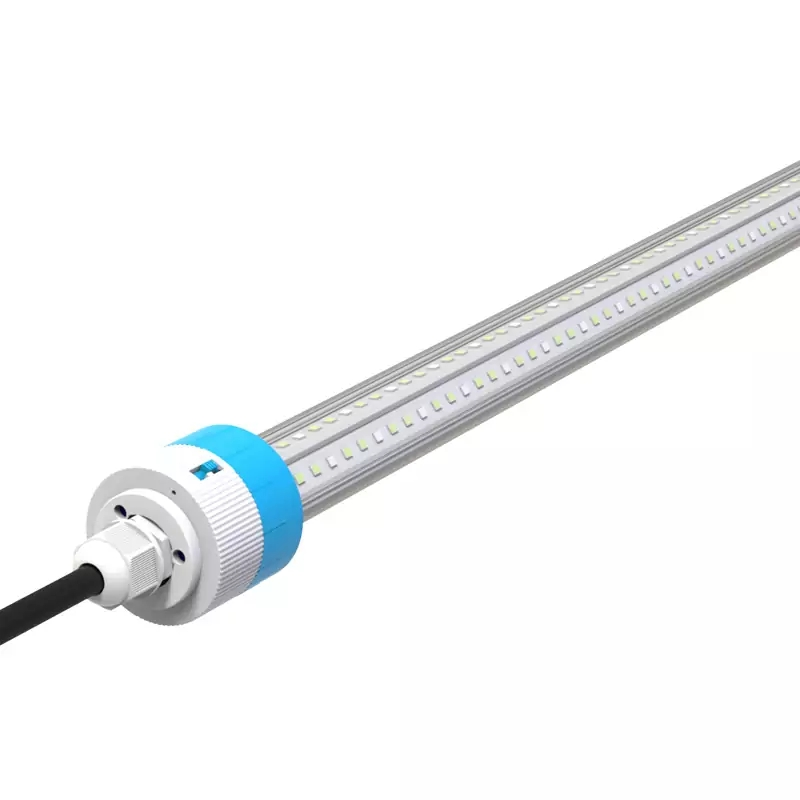
The Dichromatic Difference: How Pigs Process Light
To understand the best light for pigs, one must first understand the swine visual system. Unlike humans, who are trichromatic (seeing red, green, and blue), pigs are dichromatic. Their vision resembles that of a red-green color-blind human. They possess two types of cone receptors, making them highly sensitive to shorter wavelengths, specifically blue and green light. Conversely, they have great difficulty distinguishing between longer wavelengths, such as red, orange, and green.
This heightened sensitivity to the blue-green spectrum means that the intensity and color of light are powerful, nonverbal communication tools that directly influence the pig’s nervous system and hormonal release. The most effective swine light must align its output with this unique biological structure, ensuring that the light provided is biologically relevant and minimizes visual stress. We utilize this specific knowledge of pig photoreceptors to design our systems for optimal results in farrowing, breeding, and finishing barns.
The Strategic Role of Green Light in Swine Management
The specific manipulation of the light spectrum is a cornerstone of modern production management, and the green spectrum holds significant biological influence over the pig. The use of light color transitions a generic fixture into a piece of precision control equipment.
For various stages of production, light color is leveraged to achieve specific behavioral goals. In general, blue and green light wavelengths are effectively absorbed by the pig’s retinal cells. Studies show that these shorter wavelengths can stimulate growth and metabolism during the finishing stages. Furthermore, the light intensity and color play a crucial role in the breeding cycle. While some studies suggest red/orange light can stimulate the reproductive behavior of sows, the overall goal of swine light management is to create stable, controlled environments that reduce agitation and encourage productivity. By providing uniform light that aligns with their most sensitive visual range, our solutions promote steady growth and reduce the nervousness that can impair feed conversion and overall health.
Beyond the color, the precise intensity of the light must be managed through dimming controls for different zones. For example, farrowing houses require different light schedules and intensities than gestation barns. The best light for pigs allows for the flexibility to adjust lux levels to calm sows during farrowing or to stimulate activity and growth in younger animals. We engineer our control systems to provide this granular, programmable management, ensuring every stage of production is biologically optimized.
Beyond Wavelength: Eliminating the Stress of Flicker
The most profound failure of generic commercial lighting in swine facilities is often the presence of flicker. While not as universally sensitive as chickens, pigs still have a higher flicker fusion frequency than humans, meaning that standard 50/60 Hz lighting systems appear to flicker constantly. This invisible strobing is a continuous source of stress and agitation.
Chronic stress in pigs has documented economic consequences, including elevated cortisol levels, reduced immune function, and increased restlessness, which can lead to injuries and poor uniformity in the barn. szAMB eliminates this risk by designing our swine light systems with 100% flicker-free dimming technology. This ensures that whether the system is operating at full intensity or dimmed to a low setting for sensitive periods like farrowing, the light is delivered smoothly and reliably. This unwavering light quality is central to our commitment to animal welfare and production efficiency, translating directly into calmer animals and better growth rates for our clients.
szAMB‘s Solution: Engineering Durability and ROI
The specialized biological requirements of the pig must be matched by the technical resilience required to survive the harshest environments in agriculture. We understand that for manufacturers and commercial operators, long-term ROI is tied directly to durability and minimal maintenance. Therefore, our swine light fixtures are built to exceed industry standards for resistance.
Swine barns are characterized by high humidity, constant moisture, and highly corrosive ammonia gas. To combat this, our fixtures feature industry-leading IP67/IP69K ratings. The IP67 rating ensures complete sealing against dust and moisture, while the IP69K rating guarantees the fixture can withstand the high-pressure, high-temperature washdowns essential for maintaining hygiene and biosecurity in swine operations. Most importantly, we construct our light for pigs with ammonia-resistant materials to prevent the rapid degradation caused by barn gases. This engineering commitment means that our solutions guarantee an operational lifespan exceeding 80,000 hours, securing the long-term profitability of the investment for our partners.
By choosing szAMB, our clients invest in a complete management system that aligns technical durability with biological precision. We provide the assurance that your swine light is not only optimized for the pig’s visual and endocrine system but is also rugged enough to deliver consistent, flicker-free performance under extreme conditions, ensuring predictable and enhanced production yields.