
In the specialized field of large-scale dairy production, the term cattle light does not refer to a generic light fixture hanging in a barn. Rather, it denotes a highly specialized, science-backed lighting management system engineered to interface directly with the bovine endocrine system. At szAMB, we define cattle light as a precision tool for photoperiod manipulation, designed to optimize the biological function of the dairy herd, leading directly to measurable increases in milk production, improved fertility, and enhanced overall animal welfare.
For agricultural equipment manufacturers, specialized dealers, and commercial farm operators, understanding this distinction is crucial. Generic lighting systems fail to meet the biological and environmental demands of the modern dairy operation. Our solutions move beyond mere illumination; they are engineered to be a strategic asset that ensures every hour of light and darkness is maximized for profit and health. We focus on providing a reliable system that drives production gains of 5% to 15%—a significant competitive advantage in a demanding industry.
The Science Behind Cow Lighting: Controlling the Bovine Clock
The effectiveness of cattle light is grounded in controlling the cow’s natural circadian rhythm, or 24-hour internal clock. Like all mammals, a cow’s internal clock is primarily set by light entering the eye, which sends signals to the brain to regulate hormone secretion. The key hormonal player in this cycle is melatonin, the hormone responsible for signaling rest and darkness.
The principle is straightforward: an increase in the duration and intensity of light suppresses melatonin release. This suppression initiates a crucial hormonal cascade that positively affects lactation. Specifically, less melatonin allows for an optimized release of hormones like Prolactin and Insulin-like Growth Factor-1 (IGF-1). IGF-1 is directly linked to stimulating mammary gland activity and supporting milk synthesis. Our entire cow lighting strategy is built upon the ability to reliably and precisely manipulate this hormonal response, using light as the catalyst for enhanced productivity.
The Dual Strategy: LDPP and SDPP in Cattle light
A successful Cattle light management plan requires two distinct lighting regimes tailored to the cow’s stage in the lactation cycle: the Long-Day Photoperiod and the Short-Day Photoperiod. We provide the technology to execute both flawlessly, ensuring continuous optimization across the entire herd.
1. The Long-Day Photoperiod (LDPP) for Lactating Cows
For cows actively producing milk, the LDPP is the gold standard for maximizing output. This cycle requires 16 to 18 hours of bright light, followed by 6 to 8 hours of uninterrupted darkness. The recommended intensity for the light period must be substantial, typically ranging from 150 to 200 lux, uniformly delivered across the resting and feeding areas.
The extended period of bright light keeps the cow active, elevates IGF-1 levels, and directly results in an increase in milk yield that consistently falls in the range of 5% to 15%. This increased feed intake is not the cause of the extra milk, but the result; the cow is consuming more feed to support the biologically stimulated higher production levels. szAMB Cattle light systems make this proven performance increase a reliable reality for our clients.
2. The Short-Day Photoperiod (SDPP) for Dry Cows
The management of dry cows is just as critical to the next lactation as the management of lactating cows. We recommend and provide solutions for the SDPP, which requires the cow to receive 8 hours of light followed by 16 hours of darkness. This regime is crucial for allowing the mammary glands to fully recover and prepare for the next cycle. Studies confirm that cows exposed to SDPP during their dry period show increased milk production in their subsequent lactation, with reports demonstrating an increase of up to seven pounds per day in the following cycle. Our control systems allow the operator to seamlessly switch groups of animals between the LDPP and SDPP regimes, ensuring every stage of the cow’s life is biologically optimized.
szAMB: Engineering Precision and Durability into Cow Lighting
Executing this dual photoperiod strategy successfully demands more than just installing LED bulbs; it requires rugged, intelligent, and purpose-built Cattle light fixtures. At szAMB, we have engineered our systems to meet the unique challenges of the dairy barn environment while guaranteeing biological efficacy.
First and foremost is uniform light distribution. Shadows and hotspots created by poor fixture design act as stressors and confuse the cow’s visual system. Our fixtures ensure wide, even light distribution, maintaining the target lux levels consistently across all feed and rest areas, thereby maximizing the hormonal response across the entire herd.
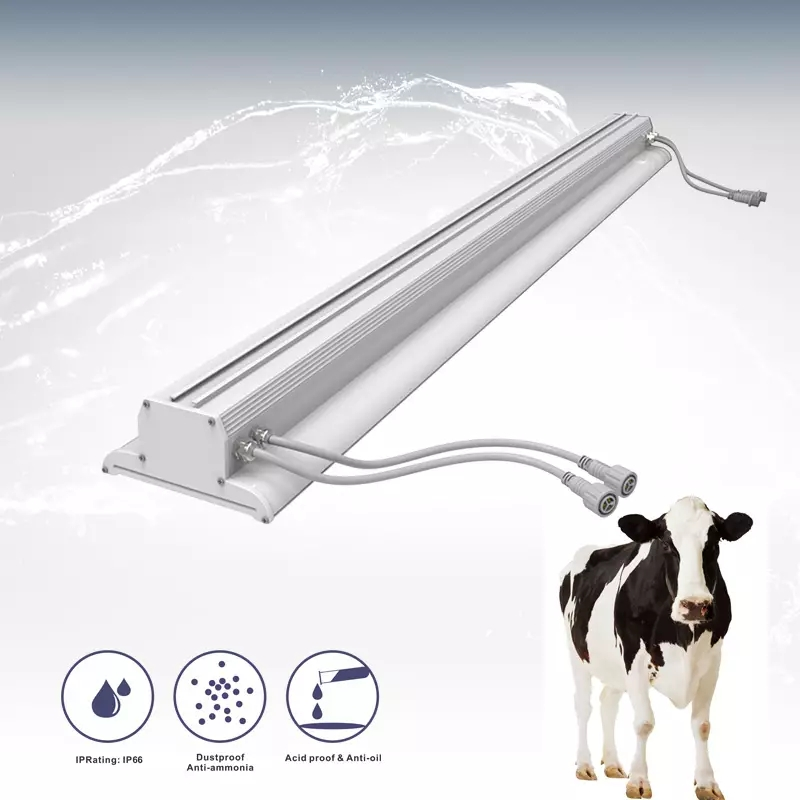
Secondly, durability is our guarantee. Dairy barns are corrosive, wet environments. Our cow lighting fixtures feature industry-leading IP67/IP69K ratings, ensuring they are fully protected against dust and can withstand the aggressive, high-pressure, high-temperature washdowns required for hygiene. Furthermore, we construct our fixtures with ammonia-resistant materials to prevent the rapid degradation caused by barn gases, guaranteeing a lifespan exceeding 80,000 hours and securing the long-term ROI for our clients.
Finally, we integrate specialized control features. To maintain the crucial 6- to 8-hour uninterrupted dark period, our systems often incorporate a low-intensity red light option. This feature provides sufficient visibility for human workers to safely navigate the barn for milking or checking on animals without producing the wavelength or intensity of light that would suppress the cow’s melatonin, thus protecting the integrity of the Cattle light program.
By leveraging the precise control and unmatched durability of szAMB solutions, we enable our partners to transform a basic overhead cost into a powerful, verifiable driver of milk production and efficiency. Our commitment to science-backed cow lighting ensures that every Cattle light system we install is an investment in the long-term profitability and welfare of the dairy herd.