
As egg producers, we at szAMB know that every management decision directly impacts hen welfare and farm profitability. One question we hear constantly from poultry farmers is: how many hours of light do laying hens truly need? The answer is not one-size-fits-all. Through years of deploying advanced chicken coop lighting for egg production, we have learned that precise photoperiod control can mean the difference between mediocre yields and peak performance. Getting light for laying hens right requires understanding both biology and practical barn conditions.
The Science Behind Light Duration and Egg Laying
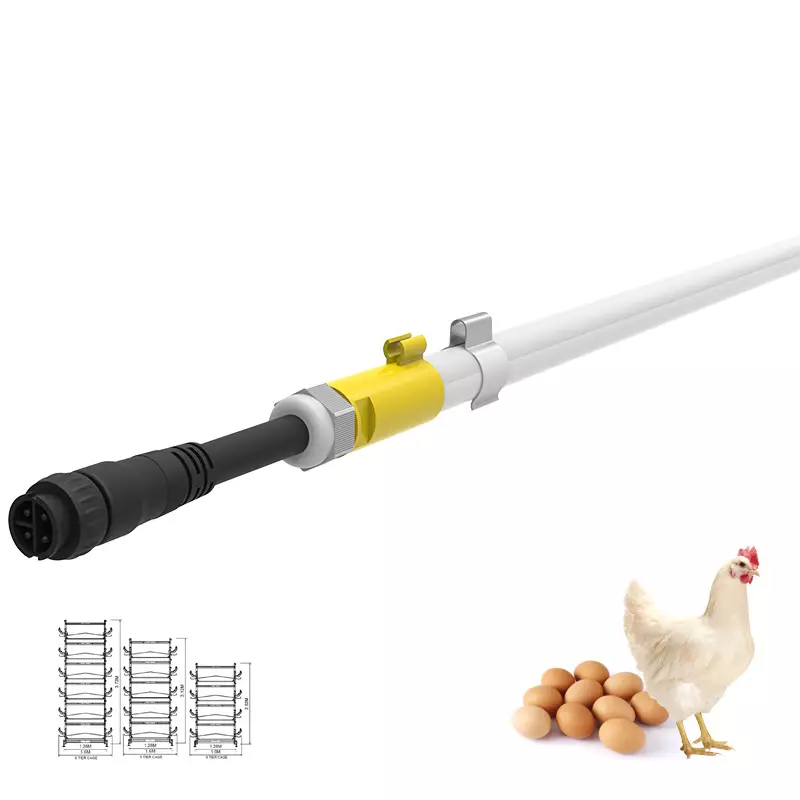
Hens are photosensitive creatures. Their pituitary gland responds to light exposure by releasing hormones that trigger ovulation. Too few hours of light for laying hens, and egg production drops sharply—sometimes by 30% or more. Too many hours, and hens become stressed, aggressive, and prone to prolapse. Based on extensive field data, we at szAMB recommend 14 to 16 hours of continuous light daily for mature laying hens during peak production. This mimics the longest days of spring and summer, when hens naturally lay most frequently. Using our DC48V T6 LED chicken coop lighting for egg production, farmers can maintain this duration precisely without flicker or sudden intensity shifts, which are known to cause flock panic.
Managing the Ramping Period and Molting Cycles
Newly transferred pullets require a different approach. For hens aged 18 to 22 weeks, we advise starting with 12 hours of light for laying hens and gradually increasing by 15–30 minutes per week until reaching 15–16 hours. This gradual ramp prevents early sexual maturation and encourages uniform lay. During forced molting or winter months, some producers reduce light to 8 hours, then step back up. Our chicken coop lighting for egg production includes red+white switchable modes—red light reduces pecking and stress during low-light periods, while white light supports inspection and feeding. This flexibility allows seamless transitions without changing fixtures.
Practical Adjustments for Barn Conditions
Not every barn is identical. High-density housing may require lower total light hours due to increased social stress. Conversely, free-range systems sometimes need extended light for laying hens to compensate for overcast weather. Our DC48V T6 LED systems feature anti-ammonia, IP67 waterproof, and shatter-proof construction with aviation-grade glue, ensuring reliable performance even in harsh, humid environments. With customizable lengths from 60 cm to 240 cm, we help farmers tailor chicken coop lighting for egg production to their exact barn layout.
Lighting the Path to Higher Egg Yields
There is no single magic number, but the 14-to-16-hour window remains the gold standard for peak production. At szAMB, our durable, corrosion-proof LED solutions give you precise control over light for laying hens—from gradual ramping to color switching. Let us help you turn the right light hours into more eggs and calmer flocks.