
Lighting plays a crucial role in enhancing egg production in layer chickens. The right chicken coop lighting for egg production can significantly affect a flock’s overall health and productivity. Farmers have a variety of lighting options, but understanding the wattage necessary for optimal results is vital. By focusing on specific parameters like light intensity and duration, it’s possible to create an effective layer chicken lighting program.
Understanding the Importance of Wattage in Poultry Lighting
The wattage of lighting used in a chicken coop directly influences the chickens’ behavior and physiological responses. Generally, achieving around 10-12 lumens per square foot in the coop is recommended for egg-laying breeds. The exact wattage depends on factors such as the size of the coop and the type of lighting used. It’s essential to keep in mind that brighter isn’t always better; excessive brightness can create stress, which negatively impacts egg production. At szAMB, we advocate for a careful balance of light to ensure the wellbeing of your flock while maximizing their output.
Creating an Effective Lighting Schedule
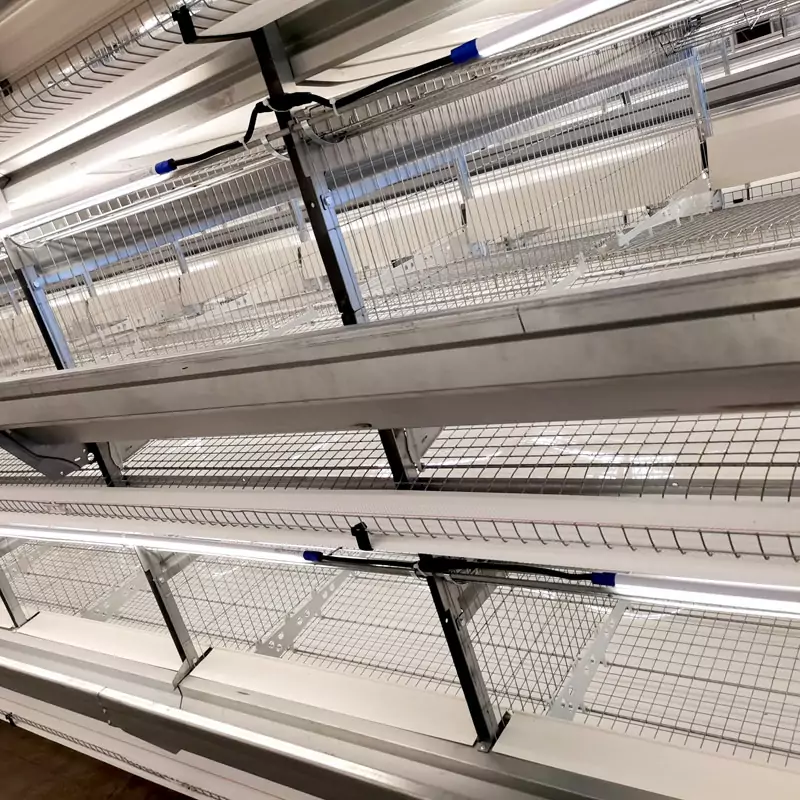
Establishing a consistent lighting schedule is equally important as choosing the right wattage. Layer chickens thrive on a regimen that mimics natural daylight cycles. To simulate this, using LED lights with adjustable wattage can help achieve desired results. The layer chicken lighting program should include about 14-16 hours of light followed by 8-10 hours of darkness daily. This arrangement not only encourages consistent laying patterns but also promotes the overall health of the hens. Using our DC48V T5 Layer Cage Poultry Lighting, for instance, allows for seamless dimming from 0.5% to 100%, making it easier to adapt to your flock’s requirements.
Selecting the Right Lighting Source
Choosing the appropriate lighting source is paramount when considering the chicken coop lighting for egg production. LED lights are becoming increasingly popular due to their energy efficiency and long lifespan, often exceeding 50,000 hours. The compatibility with various drivers—such as the AMB 100W, 200W, and 300W 0-10v—provides flexibility in terms of installation. Features like the Male & Female Fast Connect and Plug & Play installation options make it simple to integrate these lights into an existing setup. By optimizing your choice of lighting sources, you can ensure a consistent and effective lighting environment for your layer hens.
Conclusion
In conclusion, achieving optimal egg production necessitates careful consideration of chicken coop lighting for egg production. By understanding the wattage necessary, establishing an effective lighting schedule, and selecting the right lighting source, farmers can significantly enhance their poultry productivity. Implementing a structured layer chicken lighting program can lead to better egg yields while also maintaining the health of the flock. At szAMB, we recognize the importance of these factors and strive to offer solutions that align with the best practices in poultry management.