
For high-volume poultry operations—including large commercial farms, equipment manufacturers, and agricultural lighting dealers—the difference between moderate returns and maximum profitability often comes down to mastering environmental controls. Among these, the implementation of a precise broiler lighting program is arguably the most impactful non-nutritional tool available.
Light is not merely a source of illumination for chickens; it is a critical physiological trigger. It regulates the bird’s circadian rhythm, influences hormone production (like melatonin for rest and growth hormones), and fundamentally dictates behavior, including feed intake, activity, and stress levels. As a leading original design and manufacturing (ODM) partner for optimized livestock lighting, szAMB (Shenzhen AMB Technology Co., Ltd.) specializes in delivering dynamic, science-backed lighting systems that translate directly into measurable ROI for poultry businesses. This guide breaks down the essential components of a modern, welfare-compliant, and yield-maximizing lighting schedule for commercial broilers.
The Science Behind the Broiler Lighting Program
An effective broiler lighting program is a dynamic strategy that requires the precise synchronization of three critical parameters—photoperiod, intensity, and spectrum—which must be consistently adjusted as the flock progresses through its growth stages. The failure to manage even one of these variables can lead to unnecessary bird stress, poor feed conversion ratios (FCR), and increased mortality.
The photoperiod, or the light-to-dark ratio, is the most heavily studied factor. While historical practices often utilized continuous light to maximize feed intake, modern animal welfare standards and physiological research mandate mandatory dark periods. Uninterrupted periods of darkness (scotophase) are crucial for skeletal health, bone mineralization, and reducing leg abnormalities. They also allow for the secretion of melatonin, which plays a vital role in regulating the immune system and reducing stress. Major poultry welfare organizations recommend introducing a minimum of four to six hours of continuous darkness per 24-hour cycle after the first week of life.
Light intensity, measured in lux (lx), controls bird activity. Higher intensity encourages movement and feeding; lower intensity promotes rest, reduces energy expenditure, and minimizes aggressive behaviors. Furthermore, the color of light, or spectrum, significantly impacts the poultry brain since birds possess four cone types, extending their vision into the UV range. For instance, a green spectrum bias (around 500–570 nm) is suggested to promote early growth and muscle development during the starting phase, while a blue spectrum (around 450–500 nm) has a known calming effect, improving feed efficiency in older birds. A successful lighting program must therefore integrate the ability to shift the intensity and spectrum precisely across the growth cycle.
Implementation: The Optimal Phase-Specific Schedule
A precise broiler lighting regimen follows a step-down/step-up approach, ensuring the birds adapt naturally and physiologically optimize for growth and health. The following table summarizes the key targets for intensity and photoperiod across the three crucial phases of broiler production:
Growth Phase | Duration | Photoperiod (Light:Dark) | Target Intensity (Lux) | Primary Goal |
Starter | Day 1 to Day 7 | 23 Hours Light (23L:1D) | 25–50 lux | Maximize early feed/water intake and establish house familiarity. |
Grower | Day 8 to Day 30 | 16L:8D or 18L:6D | 5–10 lux | Optimize feed conversion and promote skeletal development during dark periods. |
Finisher | Day 30 to Market | 18L:6D (or slight increase to 22L:2D) | 5–15 lux | Maintain calm, maximize final weight gain, and reduce stress before processing. |
Detailed Phase Management
During the starter phase, the high intensity and near-continuous light are essential to ensure chicks immediately locate feed and water, promoting a strong start that directly correlates with final market weight. The single hour of darkness is critical for training the birds to handle sudden darkness, preventing mass panic during potential power failures.
The Grower Phase is where the most significant change occurs. Intensity must be gradually reduced from the high starter level down to 5–10 lux by Day 10. The 4–6 hours of uninterrupted darkness is mandatory for biological rest and the release of growth-promoting hormones. Lower intensity during the light phase minimizes energy waste from unnecessary activity, allowing more metabolic energy to be directed toward muscle gain.
In the final Finisher Phase, the focus shifts to maintaining calm and efficient growth. Intensity remains low, though it can be slightly increased (up to 15–20 lux) in the final days before processing to encourage final consumption, provided the increase is managed smoothly. Crucially, the transition between all phases must be gradual; abrupt changes cause stress and feed withdrawal.
Beyond the Clock: The szAMB Technical Advantage
Implementing these sophisticated programs requires equally sophisticated equipment. For large farms and equipment manufacturers focused on long-term operational efficiency and minimizing risk, the quality of the broiler lighting hardware is non-negotiable.
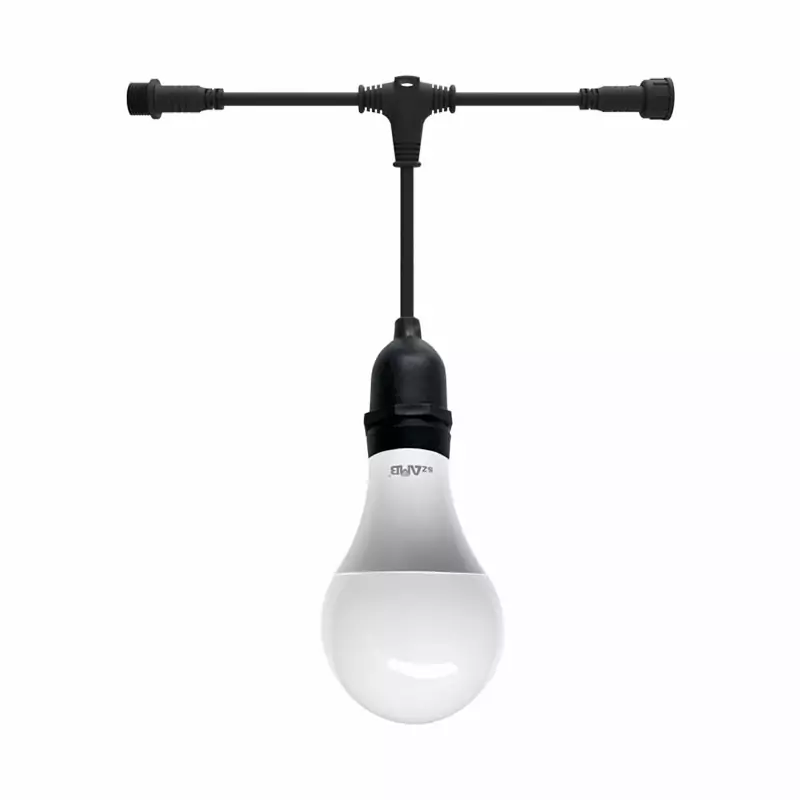
szAMB offers advanced LED solutions that meet the rigid demands of commercial poultry environments, providing the precise control and durability required for professional operations. The technical capabilities built into our systems are designed to convert the lighting schedule into tangible ROI. First, we guarantee flicker-free dimming. Poultry have a higher flicker fusion frequency (FFR, around 105 Hz) than humans (60 Hz). A poorly engineered LED system appears as a strobe light to a chicken, causing extreme stress and immune suppression. szAMB’s state-of-the-art flicker-free technology, which allows dimming from 0-100% down to 0.5%, ensures the light always appears continuous to the birds, a fundamental requirement for bird welfare and immune health. Second, our precision control and spectrum management are unparalleled. Our programmable dimmer systems enable the necessary 30-minute ramping of light intensity at dawn and dusk, fully simulating natural light cycles. Furthermore, these systems allow for the precise blending and shifting of light spectrums—from the muscle-promoting green bias in the starter phase to the calming blue light in the finisher phase—giving farm operators the granular control needed for customized, high-performance programs. Finally, we guarantee unmatched durability and longevity. Broiler houses are harsh environments defined by dust, high humidity, corrosive ammonia, and high-pressure washdowns.
Conclusion: Partnering with szAMB for Optimized Yields
The optimal broiler lighting program is a dynamic, science-backed strategy that leverages precise timing, intensity control, and spectrum manipulation to drive peak commercial performance while upholding modern welfare standards. For large-scale poultry operations, equipment distributors, and livestock manufacturers, selecting a lighting partner capable of delivering this level of precision and durability is paramount. szAMB combines decades of agri-lighting innovation with a robust, flicker-free, and ammonia-resistant product line—providing a reliable solution that not only meets but often exceeds the most stringent performance metrics for weight gain, FCR improvement, and flock health. Partner with szAMB to turn environmental management into a competitive commercial advantage. Contact our team today to discuss how a custom-engineered lighting solution can improve your production yields and deliver a powerful return on investment.