
For modern commercial swine operations, including large farm operators, equipment manufacturers, and agricultural dealers, genetic improvements and advanced nutrition have become prerequisites for profitability. The true competitive edge now lies in mastering environmental controls, particularly through the precise, science-backed application of specialized swine light. The answer to whether productivity can be optimized with changed light influence is unequivocally yes. Strategic photoperiod and intensity management directly impact sow fertility, gilt development, piglet growth, and overall herd health, providing a measurable return on investment that goes far beyond simple energy savings.
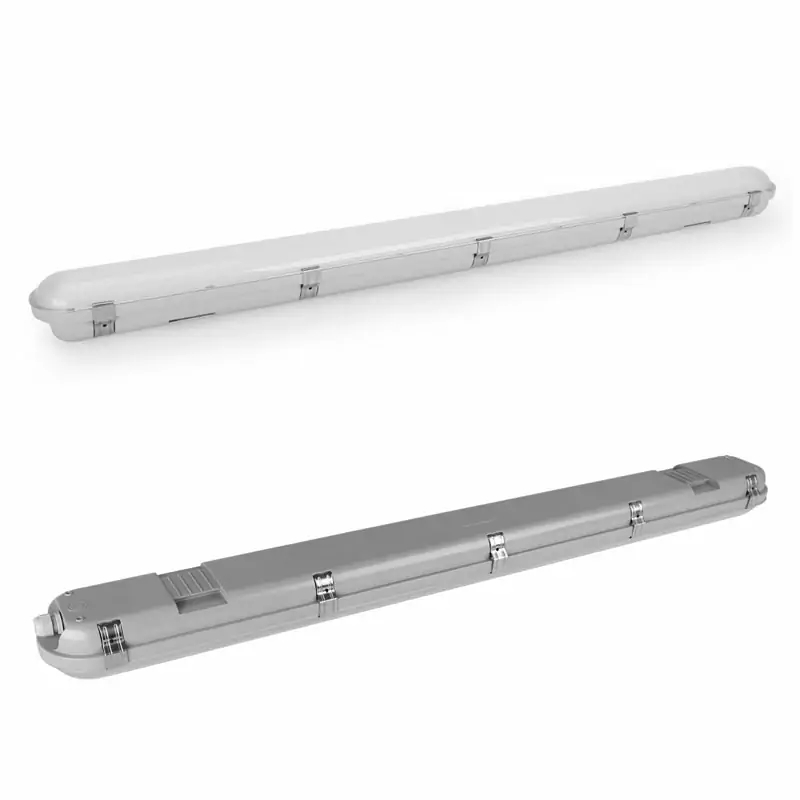
This necessity for precision lighting is addressed by specialized solutions like those in the szAMB pig lighting product category. As a leading original design and manufacturing (ODM) expert, szAMB develops durable, spectrum-optimized light for pig systems that transforms barn illumination from a basic utility into a critical tool for physiological and reproductive management. By engineering fixtures designed to withstand the harsh realities of the swine environment, szAMB ensures that the lighting program is consistently delivered, year after year.
The Photobiological Mechanism: Light as a Fertility and Growth Regulator
The influence of light on swine productivity is mediated through the same fundamental endocrine mechanism found across livestock: the precise regulation of the circadian rhythm and the secretion of key hormones. Light is perceived by photoreceptors in the eye, and perhaps even through deep brain photoreceptors, which signals the body to suppress the nocturnal release of melatonin. Melatonin, often referred to as the hormone of darkness, is intrinsically linked to reproductive status and the expression of growth factors in all mammals. Therefore, controlling the duration and intensity of the light period is equivalent to providing a management command directly to the animal’s reproductive and growth systems.
1. Enhancing Sow Fertility and Reproductive Efficiency
The most commercially significant application of controlled swine light is in the breeding and gestation phases. Sows and gilts are sensitive to photoperiodic cues, and precise light management can dramatically influence key reproductive metrics:
- Gilt Development and Puberty: Exposing young female pigs (gilts) to a Long-Day Photoperiod (LDP)—typically 16 hours of high-intensity light (150–200 lux) followed by a strict 8 hours of darkness—is a well-established method to accelerate the onset of puberty. This early, reliable induction of estrus is a major factor in improving farm efficiency, allowing gilts to be integrated into the breeding herd sooner and reducing non-productive days. While the exact physiological mechanism is complex and interacts with other factors like the boar effect, maintaining the required LDP intensity with quality swine light is a non-negotiable component of a successful gilt development program.
- Breeding and Gestation: Maintaining the Long-Day Photoperiod throughout the breeding phase and the subsequent gestation period actively suppresses melatonin, which in turn supports the necessary hormonal environment for successful implantation, optimal fetal development, and a prompt return to estrus post-weaning. An optimal light for pigs program ensures sows cycle reliably and quickly, directly reducing non-productive sow days (NPDs) and increasing the critical metric of Pigs Weaned per Sow per Year (PSY). Research indicates that the high intensity of the LDP is crucial for maximizing this hormonal response in the sow.
2. Optimizing Piglet Growth and Welfare in Farrowing
While the reproductive effects are paramount in the breeding barn, light also plays a secondary, yet critical, role in the farrowing house. Piglets require adequate visibility to navigate the pen, quickly locate the udder, and access feed and water sources. A stable, low-stress light environment, often achieved through dimmable swine light systems, promotes activity during the day, which is linked to enhanced early weight gain. Furthermore, the presence of stable, uniform lighting during human working hours aids staff in critically monitoring the litter for health issues, fostering prompt intervention that directly contributes to reduced crushing incidents and improved survival rates during the critical first few days of life. The ability to smoothly dim the lights is essential here to allow for night checks with minimal disturbance to the resting sows.
Technical Requirements: Durability and Precision for the Swine Barn
Implementing a productivity-enhancing lighting program for pigs requires specialized hardware that can achieve biological precision and, crucially, withstand the extreme environmental stresses of a hog barn. Generic industrial lighting is insufficient due to vulnerability to flicker, corrosive air, and the demands of high-pressure cleaning.
The following table summarizes the dual requirements of biological efficacy and structural resilience that must be met by advancedlight for pig systems:
Feature Category | Biological Requirement/Benefit | szAMB Swine Light System Specification |
Hormonal Control | Requires LDP (16L:8D) intensity for fertility. | High Lumen Output Fixtures (150-200 lux) and Precise Programmable Control. |
Welfare & Stability | Eliminate visual flicker and sudden light shocks. | Flicker-Free Dimming (0-100%) and smooth sunrise/sunset simulation. |
Environmental Resilience | Must survive high humidity, ammonia, and high-pressure cleaning. | IP67/IP69K Rated and Ammonia-Resistant Housing (up to 80,000+ hours lifespan). |
Operational Uniformity | All fixtures must operate identically across the barn. | Master and Slave Controller architecture ensures precise synchronization. |
The szAMB System: Engineered for Swine Resilience
The commercial success of any light-for-pigs solution depends entirely on its longevity in the notoriously harsh environment of a hog barn. High humidity, constant dust, and the concentrated corrosive effects of hydrogen sulfide and ammonia from manure rapidly degrade standard electrical components and fixtures.
szAMB’s specialized swine lighting solutions are explicitly engineered to conquer this corrosive environment. Our fixtures are constructed with robust, ammonia-resistant materials and feature a combined IP67/IP69K rating. This top-tier certification guarantees the lighting system is completely sealed against dust ingress and remains immune to the high-pressure, high-temperature water jets used during frequent and rigorous sanitation cycles. This unmatched durability is crucial because fixture failure or even moderate lumen depreciation directly compromises the required LDP intensity, potentially delaying estrus and increasing non-productive days. By delivering guaranteed long-term reliability and a lifespan often exceeding 80,000 hours, szAMB protects the farm’s considerable investment in its lighting infrastructure.
Furthermore, our swine light systems incorporate integrated control technology for operational excellence. The implementation of a Master and Slave Controller architecture is essential in long barn settings. This system allows the farm manager to define the precise lighting schedule—including the 16-hour photoperiod and smooth dimming transitions—on a single master unit. This master unit then synchronizes all slave fixtures across the entire facility. This centralized, automated control removes the risk of human error that can compromise the synchronization of the breeding cycle and ensures every animal receives the exact same light dosage, which is crucial for maintaining herd uniformity and achieving reliable breeding targets. The flicker-free technology integrated into the dimming capability also ensures that the environment remains calm and stress-free for the pigs, supporting steady feed intake and a stronger immune response.
Conclusion
The optimization of pig productivity through the influence of light is a proven, non-nutritional management strategy that delivers superior herd performance. By utilizing high-intensity, precisely scheduled swine light—specifically the Long-Day Photoperiod—producers can significantly improve gilt puberty rates, enhance sow fertility, and ensure consistent reproductive cycles, while simultaneously supporting critical early piglet growth and welfare.
szAMB provides the specialized, highly durable light for pig systems required to implement these advanced photobiological strategies successfully. Our commitment to high output, flicker-free stability, IP69K-rated resilience, and integrated Master and Slave control ensures that the lighting infrastructure becomes a foundational and reliable element of high-efficiency herd management, converting environmental control into enhanced commercial advantage.
Contact szAMB today to partner with an ODM expert and integrate precision swine light that guarantees optimal physiological performance and sustained operational success.