
As we explore how a master controller functions in animal-friendly lighting systems, we find that its primary purpose is to coordinate and regulate all connected devices with precision. In our work at szAMB, we design solutions that help livestock farmers manage light intensity, timing, and dimming modes smoothly. A master controller allows us to maintain consistent lighting conditions that support animal welfare and stable production environments. When we integrate features such as wavelength adjustments and flicker management, our system ensures that broilers, layer hens, and other livestock receive a well-balanced lighting cycle. This sets the foundation for understanding what master control is used for and how it benefits modern agricultural facilities.
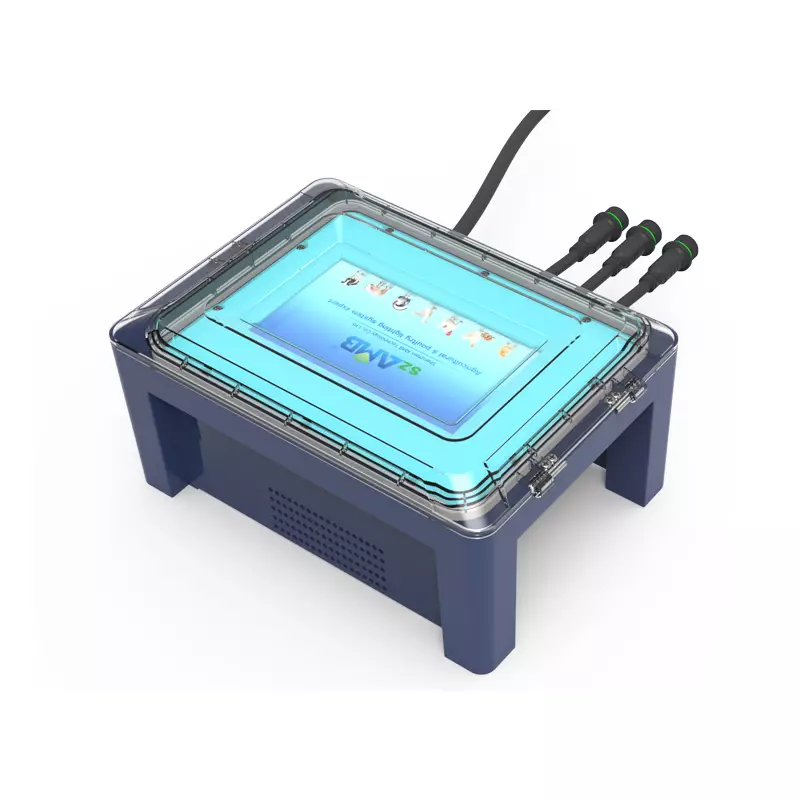
How Master & Slave Structures Improve Farm Management
A well-designed master control system becomes even more effective when paired with a master and slave controller structure. At szAMB, we apply this configuration to maintain synchronization across multiple lighting zones. By assigning one device as the master and the rest as slave units, our solution provides stable dimming commands, transition effects, and daylight simulation across large barns. In practical applications, a master and slave controller helps farm operators minimize manual adjustments and maintain uniform performance. Within this structure, the master unit stores programmed cycles, distributes timing signals, and ensures that all slave devices follow the same operating logic. This approach answers what master control is used for: consistent, centralized, and scalable lighting management across different farm areas.
Smart Features That Support Daily Operation
To further enhance how users experience a master controller, we have equipped our system with a range of intelligent features. Our Master & Slave Control / Battery Back-Up solution includes a built-in digital CPU with smart timing and dimming controls, allowing scheduled programs or temporary override modes. A 7-inch capacitive touch LCD ensures clear interface interaction, while Triac and BiMos technologies support leading-edge and trailing-edge dimming, as well as 0-10V signal input. For farms that rely on generators during outages, the battery back-up RTC protects programmed cycles from disruption. With these capabilities, we use the master controller not only to automate tasks but also to enhance reliability and operational flexibility for diverse livestock environments.
Conclusion
In summary, a master controller is used to coordinate lighting behavior, support animal welfare, and simplify farm management. Through a master and slave controller design, our company’s systems at szAMB maintain consistent performance across barns of different sizes. Combined with smart timing functions, dimming technology, and battery back-up protection, our master control solution helps users manage lighting more efficiently and confidently. By understanding what master control is used for, livestock operators can adopt systems that bring stability, convenience, and long-term value to their daily operations.