
For commercial dairy operators, equipment manufacturers, and agricultural lighting dealers, environmental management is directly tied to milk yield and reproductive efficiency. The question of whether LED lighting for dairy cows affects the animals is answered conclusively by decades of research: light is a powerful, non-invasive management tool that profoundly influences the bovine endocrine system, health, and productivity. The effects are not superficial; they are deep-seated physiological responses that can drive substantial commercial returns.
The strategic application of cow lighting—specifically, controlling the duration and intensity—is now a standard, critical practice for optimizing dairy farm profitability and achieving maximum biological potential from the herd. As an original design and manufacturing (ODM) expert, szAMB provides specialized cattle lighting systems engineered to leverage these photoperiodic principles for superior commercial results, ensuring the light environment actively supports the farm’s economic goals.
The Endocrine Mechanism: How Light Impacts the Dairy Cow
The most significant impact of cow lighting relates to the hormone melatonin, which is the primary driver of the sleep-wake cycle and is produced exclusively during periods of darkness. By precisely controlling the light-to-dark ratio (photoperiod), dairy managers can manipulate melatonin levels to increase production and manage critical phases of the cow’s life cycle. The effect is systemic, regulating not just sleep, but metabolism and growth factors.
1. Melatonin and Milk Production: The Long-Day Photoperiod (LDP)
The most robust and commercially valuable research involves the Long-Day Photoperiod (LDP) strategy. Exposing lactating cows to an LDP of 16 to 18 hours of continuous, high-intensity light (150–200 lux) followed by a strict 6 to 8 hours of darkness actively suppresses the secretion of melatonin during the day. Lower circulating melatonin levels are scientifically linked to increased levels of Insulin-like Growth Factor-I (IGF-I), a key metabolic hormone that supports nutrient partitioning directly to the mammary gland. This redirection of energy facilitates enhanced milk synthesis. Studies across multiple universities and commercial herds consistently show that LDP can reliably increase milk yield by a significant margin, typically ranging from 6% to 15%, when compared to cows housed under natural or short-day lighting conditions. Furthermore, this increase is achieved without negatively impacting feed intake or body condition when the diet is properly formulated for the higher production level.
2. Dry Cow Management and Preparing for Lactation
Conversely, the same photoperiodic control is utilized for managing cows during their non-lactating, or dry, period. During this time, Short-Day Photoperiods (SDP) of less than 12 hours of light are beneficial. By increasing the amount of darkness, melatonin secretion is maximized. Higher melatonin levels during this phase prepare the cow for the subsequent lactation by enhancing the growth and development of new milk-producing secretory tissue in the udder. This strategic use of light ensures that the cow is biologically primed to enter the next lactation cycle at maximum capacity, making photoperiod management a continuous, year-round strategy.
3. General Health and Circadian Rhythm
Beyond direct production, consistent LED lighting for dairy cows supports the cow’s overall biological clock. Light is essential for maintaining a strong circadian rhythm, which is vital for robust immune function, consistent feeding times, and overall digestive health. A reliable lighting schedule promotes uniformity in the herd’s behavior, leading to reduced standing time, more predictable lying and feeding patterns, and generally better welfare indicators.
Technical Requirements for Modern LED Lighting in Dairy
To reliably implement Long-Day Photoperiods and achieve the associated productivity gains, the cow lighting system must meet strict technical specifications far beyond typical industrial lighting. Failure to achieve the required intensity or to maintain consistency negates the hormonal effect entirely.
Feature | Photoperiodic Requirement | szAMB Cattle Lighting Specification |
Intensity | Must provide a minimum 150–200 lux at cow level. | High Output Fixtures are designed to achieve required LDP intensity uniformly across wide barn spans with minimal fixtures. |
Duration Control | Precise 16-18 hours of light followed by strict 6-8 hours of darkness. | Programmable Master Control ensures automated, reliable scheduling and smooth dimming transitions. |
Spectrum | Optimal light composition for transmission to the hypothalamus. | Engineered Spectrum output ensures maximum hormonal stimulation and clear light for staff visibility. |
Flicker/Stability | Eliminate flicker stress on highly sensitive animals. | Flicker-Free Technology across the entire dimming range for animal welfare and reduced stress. |
The most effective LED lighting for dairy cows uses dedicated high-output fixtures, like those offered by szAMB, to ensure the necessary 150–200 lux intensity is achieved uniformly across the feeding and resting areas. Achieving this intensity with older, high-heat metal halide or fluorescent technology was often energy inefficient and created excessive ambient heat, which is detrimental to dairy cow comfort. Modern LED technology provides the necessary luminous output while maintaining low energy draw and minimal heat emission, directly supporting cow welfare during warmer months.
The szAMB System: Durability and Precision for Cow Lighting
The significant benefits of LED lighting for dairy cows can only be sustained if the hardware is completely reliable. Dairy barns are among the most aggressive agricultural environments due to extreme humidity, high concentrations of corrosive ammonia from manure, and frequent, intense high-pressure sanitation procedures.
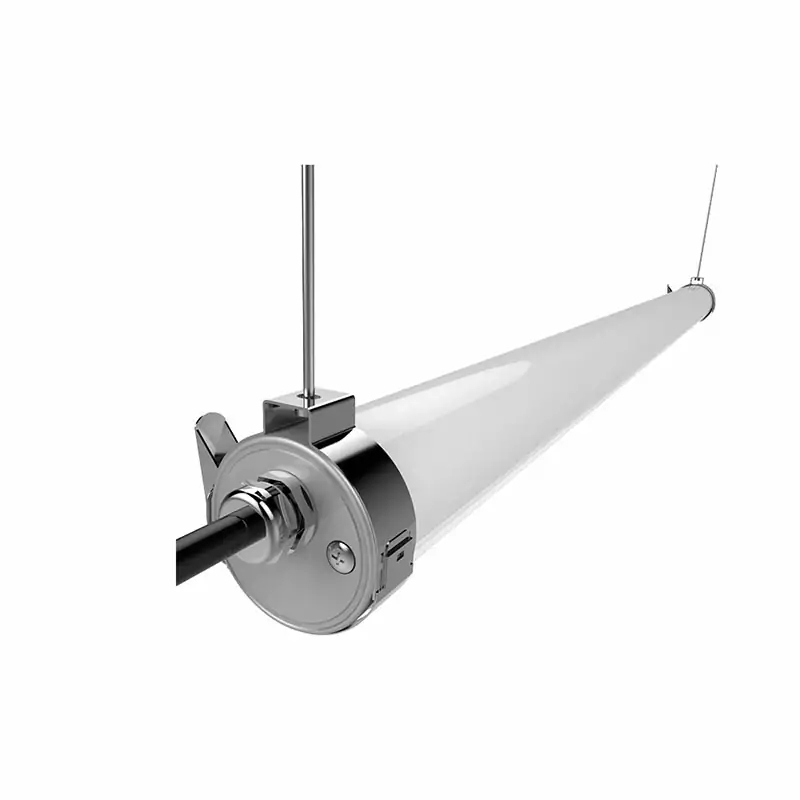
szAMB‘s cattle lighting solutions are specifically engineered to withstand this harsh reality. Our fixtures are built with specialized, corrosion-resistant materials and feature a combined IP67/IP69K rating. This certification guarantees the light fixture is completely sealed against dust and immune to high-pressure, high-temperature water jets used during rigorous sanitation cycles. This unmatched durability is crucial for maintaining the required high light intensity without fixture failure or lumen depreciation, thus protecting the farm’s multi-year capital investment and ensuring the photoperiodic program remains continuous and effective. Furthermore, szAMB systems offer the required precision through their integrated control systems, ensuring the necessary 16–18 hour photoperiod is consistent daily. This technological reliability ensures that the significant investment in cow lighting consistently delivers the proven boost in milk yield necessary for commercial success.
Conclusion: LED Lighting as a Productivity Lever
The evidence is clear: LED lighting for dairy cows does not merely illuminate the barn; it acts as a direct, proven lever for increased productivity and improved animal health. By scientifically managing the photoperiod to suppress melatonin during lactation (Long-Day Photoperiod), dairy producers can reliably increase milk yield by a significant percentage, generating a rapid and reliable return on investment.
szAMB provides the specialized, highly durable cow lighting systems required to implement these advanced photoperiodic strategies. Our commitment to high output, flicker-free stability, and IP69K-rated resilience ensures that the system delivers sustained productivity gains, making the lighting infrastructure a foundational element of commercial success and modern herd management.