
In the competitive landscape of modern agricultural production, profitability is dictated by the precise management of biological inputs. While nutrition, genetics, and climate control receive substantial investment, a critical and often underestimated tool for driving both productivity and animal health is lighting. For professionals across the agricultural supply chain—including poultry and livestock equipment manufacturers, large farm operators, and specialized agricultural lighting dealers—understanding and implementing advanced lighting solutions is essential for maintaining a competitive edge and ensuring regulatory compliance.
Lighting is far more than simple illumination; it is a sophisticated managerial input. By carefully controlling the variables of light—such as spectrum, intensity, and duration—operators can fundamentally regulate internal animal physiology, maximize production yields, and secure a significant Return on Investment (ROI). This extensive post explores the scientific necessity of specialized illumination and outlines the key technical factors that sophisticated livestock lighting solutions must master to ensure peak operational efficiency.
Beyond Brightness: The Four Pillars of Effective Livestock Lighting
The foundational challenge in agricultural lighting lies in the stark difference between human and animal vision. The human eye operates based on three primary colors (trichromatic vision), optimized for daylight perception. Animals, however, possess evolved visual systems tailored to their survival and reproductive needs. Poultry, for instance, are tetrachromatic, capable of perceiving light far into the UV-A spectrum, which is invisible to humans. Furthermore, an animal’s body doesn’t just “see” light with its eyes; light that penetrates the skull regulates the pineal and hypothalamic glands, controlling vital hormones like melatonin and Insulin-like Growth Factor-1 (IGF-1). To truly optimize a facility and its inhabitants, four critical lighting factors must be managed with absolute precision.
- Wavelength (Light Spectrum)
The color of light acts as a powerful biological signal. The spectrum delivered to the animals directly influences behavior, growth rates, and reproductive cycles. In poultry operations, distinct wavelengths are deployed for specific outcomes. Red light, specifically around 630-650 nm, is highly effective because it penetrates the skull to stimulate the hypothalamus, which controls sexual maturity and hormone secretion—a necessity for increasing egg production in layers. Conversely, the cooler blue or green spectrum is used in early growth stages for broilers. This light promotes muscle development, increases calm behavior, and can reduce aggressive interactions, directly contributing to higher marketable weights and better feed conversion ratios. In dairy cattle, specialized blue-enriched white light is utilized during the long photoperiod (LDP). This spectrum efficiently suppresses melatonin production, maximizing alertness and activity, which is proven to boost milk yield and reproductive fertility in the herd.
- Flicker Rate (Frequency) and Animal Stress
This technical specification is arguably the most important differentiator for high-quality LED barn lights. The human eye has a relatively low Critical Flicker Fusion (CFF) rate, meaning we no longer perceive flickering above approximately 50-60 Hz. Livestock, especially poultry and some swine breeds, have a CFF that can easily exceed 120 Hz, and in some cases, up to 200 Hz. Standard commercial LEDs or legacy fluorescent fixtures, which operate at frequencies visible to the animals, effectively subject them to a constant, jarring strobe light. This invisible flickering is a chronic environmental stressor, leading to measurable physiological consequences: elevated cortisol levels, increased anxiety, higher aggression (manifesting as feather pecking), and ultimately, decreased feed intake and compromised immune systems. Therefore, any effective solution must deliver 100% flicker-free dimming across the entire light intensity range (0-100%) to fully mitigate this costly source of stress and improve animal welfare.
- Photoperiod (Duration and Transition)
The duration and timing of light exposure—the Photoperiod—is crucial for regulating circadian rhythms and endocrine function. For dairy cattle, the implementation of a consistent Long-Day Photoperiod (16 hours of light followed by 8 hours of darkness) is a non-negotiable best practice. Studies have repeatedly shown that this regimen increases milk yield by 5% to 15% through the sustained elevation of IGF-1. Precision control is equally critical in poultry, where photoperiods must be carefully managed to control sexual maturity and maintain peak production cycles. This management requires more than just an on/off switch; it demands systems capable of simulating a gradual sunrise and sunset. These gentle transitions are necessary to prevent the sudden stress response that a harsh light change can trigger, which is vital for maintaining calm and reducing behavioral issues in the flock.
- Intensity and Uniformity
Light intensity (measured in lux or foot-candles) must be precisely tailored to the animal’s life stage and specific species requirements. Overly intense light can cause nervousness and eye damage, while insufficient light inhibits proper development and feeding behavior. Beyond the total intensity, uniformity is paramount. Poorly distributed light creates sharp contrasts and shadows. Animals will naturally avoid these shadows, leading to crowding in brightly lit areas, which increases stress, trampling, and floor egg incidents. An advanced livestock lighting system must ensure wide, uniform light distribution across the entire facility footprint, promoting consistent feed and water access.
szAMB: Engineered for Agricultural Excellence and Verified ROI
The effective management of these four critical factors requires purpose-built, rugged, and intelligent technology. As an established ODM and OEM company, szAMB has spent nearly two decades specializing in creating tailored lighting environments that consistently deliver measurable economic results for large-scale production facilities globally.
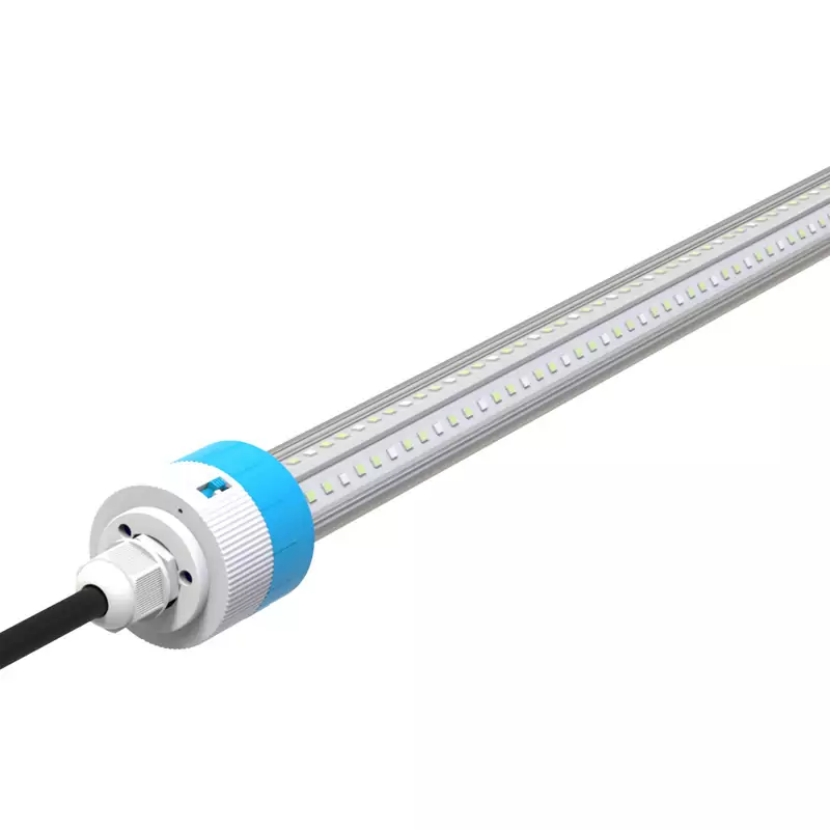
The company’s specialized livestock lighting systems are designed not just for illumination but for extreme durability in challenging environments. The need for longevity is addressed through industry-leading technical specifications, including IP67/IP69K ratings. These ratings ensure the fixtures withstand the rigorous high-pressure washdowns and high humidity necessary for maintaining hygiene in pig and poultry houses. Furthermore, the fixtures feature ammonia-resistant construction materials. This is a crucial feature, as the corrosive ammonia gas common in barn air can rapidly degrade standard electrical components, leading to premature fixture failure. By incorporating these robust features, szAMB guarantees reliable performance and extends the product lifespan to over 80,000 hours, significantly reducing maintenance costs and improving the long-term ROI of the LED barn lights investment. Additionally, the Smart LED Dimmer Control provides operators with the programmable intelligence required for precise, automated photoperiod management and sunrise/sunset simulation.
Driving Production Yield with szAMB Solutions
The investment in advanced lighting is justified by the verifiable gains in production and welfare. Farm trials conducted with szAMB solutions consistently highlight compelling outcomes. In poultry operations, customers have reported substantial benefits, including an average decrease of 8% in ground eggs, a 9% increase in body weight gain, and a substantial 54% decrease in bird mortality in broiler operations—results directly linked to the stress-free environment created by flicker-free lighting. For cattle, the optimized photoperiod extension delivered by the lighting systems leads to proven increases in milk production and improved fertility in dairy herds.
By partnering with a manufacturer specializing in science-backed livestock lighting, manufacturers and large farm operators can transform a simple utility into a powerful, profitable management tool that optimizes both animal welfare and economic yield.