
In modern commercial poultry farming, light quality is recognized as a profound physiological tool—not merely a utility. For equipment manufacturers, large farm operators, and agricultural dealers, selecting the best light for poultry is a strategic decision that directly impacts profitability, measured in growth rates, feed conversion efficiency (FCR), and overall animal welfare. The “best” light is one that seamlessly integrates precision control over intensity, spectrum, and photoperiod with the durable, rugged design demanded by the unique environment of a poultry house.
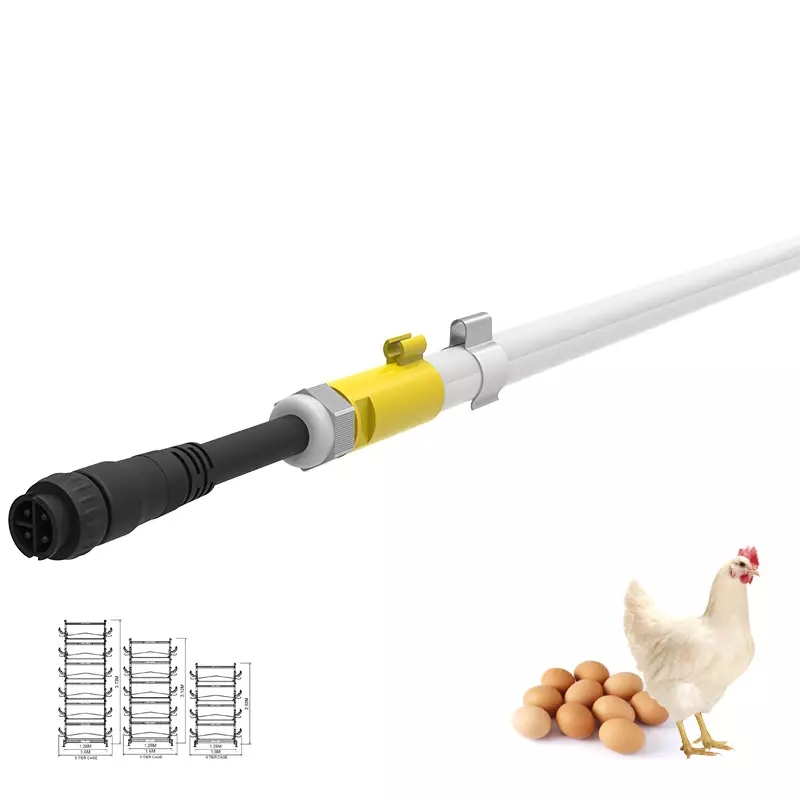
This requirement for advanced performance points directly to specialized DC (Direct Current) LED poultry lights. As an original design and manufacturing (ODM) partner, szAMB has engineered systems, such as the DC48V T6 LED lighting solution, that meet the highest standards of photobiological control and operational longevity.
The Three Pillars of Optimal Poultry Lighting
The best light for poultry is one that can dynamically satisfy the biological needs of the birds across three distinct dimensions. Unlike conventional lighting, which offers static illumination, specialized LED poultry lights allow for precision management of these factors, ensuring optimal development at every stage of life.
1. Spectrum (Color): The Hormonal and Behavioral Driver
The light spectrum is arguably the most biologically critical component. Birds possess four cone types, allowing them to perceive light differently than humans, extending their vision into the UV range. Different colors trigger different physiological responses:
- Blue-Green Light (Growth and Calm): Research indicates that light in the blue-green range (around 450–570 nm) is effective during the early stages of life for broilers, promoting muscle development, feed efficiency, and overall growth uniformity. Furthermore, blue light has a calming effect, reducing stress and aggressive behaviors in all types of poultry.
- Red Light (Reproduction and Activity): Red light (long wavelength, 630–660 nm) is vital for layers and breeders. Because it penetrates the skull more easily, it stimulates the hypothalamic photoreceptors in the brain, triggering the release of reproductive hormones and maximizing the persistency of lay. In broiler house lighting, a red-enriched spectrum is often used during specific periods to stimulate activity and feeding behavior.
The ideal solution is not a single color but a full-spectrum fixture that can provide specific spectral peaks or dynamic shifting throughout the day or the bird’s life cycle.
2. Intensity (Lux): The Activity Regulator
Light intensity, measured in lux (lx), must be precisely managed to regulate behavior. High intensity stimulates activity and feed consumption, essential during the brooding phase, but can also induce stress and feather pecking if maintained too high. Low intensity promotes rest, reduces energy expenditure, and is ideal for the core growing phase. For optimal performance, the lighting system must be capable of seamless, wide-range dimming, from 100% down to 0.5%, without causing stress or flicker.
3. Photoperiod (Duration): The Circadian Controller
The photoperiod—the ratio of light to dark hours—governs the bird’s circadian rhythm. For broilers, this means establishing a short dark period early for rest and skeletal health, while for layers, it means establishing a long, stable photoperiod (14 to 16 hours) to trigger and maintain egg production. Any disruption to the schedule, particularly sudden on/off transitions, causes panic and stress, highlighting the need for gradual sunrise and sunset simulation.
Technical Requirements for Modern Broiler House Lighting
Achieving the required level of precision and longevity in a commercial farm environment demands specialized hardware. The broiler house lighting system is subjected to daily exposure to corrosive elements like ammonia, dust, and high-pressure water used for cleaning.
Feature | Technical Requirement | szAMB Solution (DC48V T6) |
Flicker | Absolutely Zero Flicker (FFR above 120 Hz) | Flicker-free operation across the entire dimming range (0-100%) to eliminate bird stress. |
Dimming | Smooth, wide-range control (100% to 0.5%) | Seamless dimming that mimics natural sunrise/sunset for stress reduction. |
Durability | Ammonia, dust, and water jet resistance | IP67/IP69K rating ensures complete protection against high-pressure washdowns and corrosives. |
Safety/Power | Low Voltage Operation | DC48V low-voltage system minimizes shock risk and enhances safety in damp environments. |
The Importance of Flicker-Free and DC Power
A critical differentiator for szAMB solutions is the integration of advanced technology designed specifically for poultry physiology. Chickens detect flicker at a far higher frequency than humans (up to 120 Hz). Standard AC-driven systems often flicker at rates visible and stressful to the birds. szAMB’s LED poultry lights are engineered to be flicker-free across the entire dimming range, ensuring a completely stable visual environment that promotes calm behavior, better feed intake, and enhanced immune response.
Furthermore, the adoption of a DC48V system, such as the T6 model, fundamentally enhances safety in damp agricultural settings. Running the fixtures at low DC voltage minimizes the risk of electrocution during cleaning and maintenance, which is a major operational advantage for large farms and a key selling point for equipment manufacturers and installers.
Conclusion: The Best Light is a System
The best light for poultry is not a bulb, but a precise, reliable, and durable system. For commercial success, broiler house lighting and layer facilities require dynamic control over light quantity (intensity), quality (spectrum), and timing (photoperiod).
The szAMB DC48V T6 LED lighting system provides the optimal solution by combining flicker-free, full-spectrum dimming technology with rugged, low-voltage (DC48V) construction that is certified IP67/IP69K. This ensures the system delivers the biological precision required for peak animal performance while guaranteeing the operational stability and safety demanded by the commercial agricultural environment.
Partnering with szAMB means investing in a lighting infrastructure that functions as a sophisticated management tool, driving measurable improvements in flock health, FCR, and overall profitability.