
In livestock environments, lighting is more than just visibility. It supports animal behavior, feeding rhythm, and overall farm management efficiency. For producers working with swine lighting systems, stable and efficient power delivery is essential to maintain consistent illumination throughout the day and night cycles.
At szAMB, we design lighting solutions for demanding barn conditions, where humidity, ammonia exposure, and frequent cleaning can challenge electrical stability. That is why selecting the right power source is a key part of building a dependable lighting setup for swine operations.
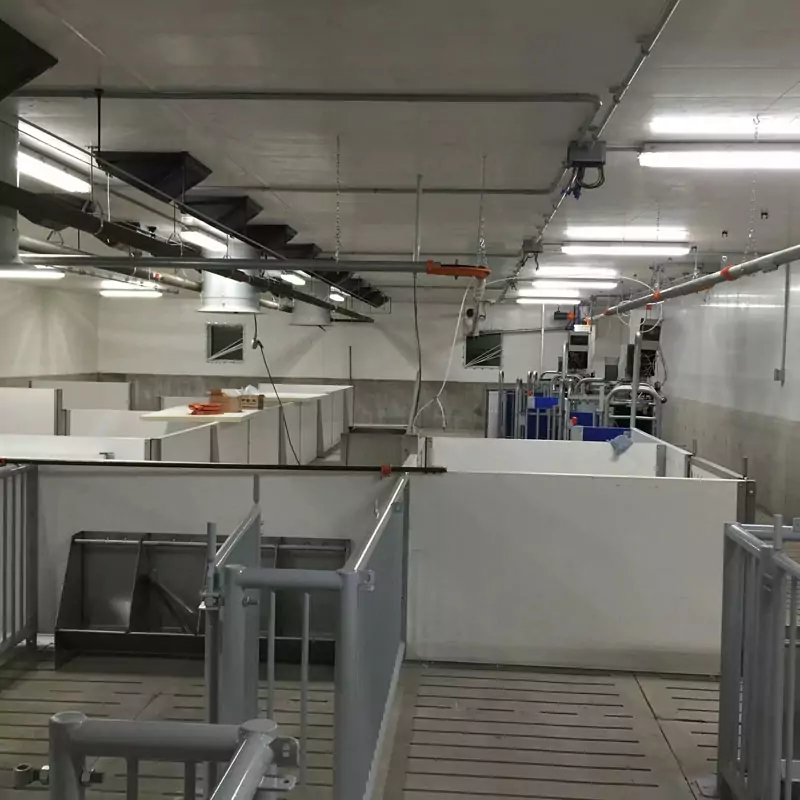
Common Power Sources Used in Swine Lighting
Most modern swine light systems rely on three main power approaches: direct AC grid connection, low-voltage DC systems, and controlled dimming driver setups.
AC grid power remains the most widely used option because it is straightforward and compatible with barn infrastructure. However, stability depends heavily on installation quality and protection against voltage fluctuations.
DC low-voltage systems are often chosen in newer farms aiming for safer wiring layouts and reduced electrical risk in wet environments. These setups are especially useful when combined with centralized power units that simplify maintenance.
Driver-based systems, often paired with LED lighting, are increasingly preferred because they allow precise control of brightness and timing. In many barns, intelligent controllers help simulate natural daylight cycles, improving animal comfort and supporting operational routines. szAMB integrates smart dimming technology into its livestock lighting ecosystem to ensure consistent performance across different barn zones.
Power Stability and Environmental Challenges
Swine barns are harsh environments for electrical equipment. Moisture, cleaning pressure, and corrosive gases can reduce the lifespan of poorly protected systems. This is why IP-rated fixtures and stable power drivers are essential components in any installation.
High-quality swine lighting systems are typically designed to maintain stable output even under fluctuating voltage conditions. For example, LED fixtures built for livestock use often include protective circuitry and sealed housings that help maintain consistent illumination even during frequent washdowns and long operating hours.
At szAMB, our lighting solutions are engineered for these exact conditions, ensuring that power delivery remains steady while reducing maintenance interruptions.
How We Recommend Choosing the Right Setup
From our experience working with farms globally, the best power source depends on barn size, wiring infrastructure, and automation needs.
For smaller farms, a direct AC-powered system with high-quality drivers is often sufficient. For larger or more advanced facilities, centralized DC systems combined with programmable controllers provide better scalability and lighting precision.
When integrating swine lighting across multiple barns or zones, it is also important to consider redundancy in power distribution to avoid full-system interruptions during maintenance or faults.
Conclusion
Selecting the right power source for swine lighting is about balancing stability, safety, and control. Whether using AC supply, DC systems, or smart driver-based configurations, the goal remains the same: maintaining consistent lighting that supports animal welfare and efficient farm operations.
At szAMB, we continue to refine our lighting systems to work seamlessly with different power infrastructures, helping farms achieve reliable illumination under real-world barn conditions.