
At szAMB, we have spent nearly two decades refining how LED barn lights interact with livestock. As a national high-tech enterprise in China, we operate under ISO9001 and ISO14001 standards, ensuring every lighting solution we engineer meets rigorous quality and environmental benchmarks. When clients ask us, “What is the best color light for animals?” our answer draws from extensive field research and real-world poultry and livestock operations. The right spectrum does more than light up farm animals—it directly influences feeding behavior, stress levels, reproductive cycles, and overall herd or flock health.
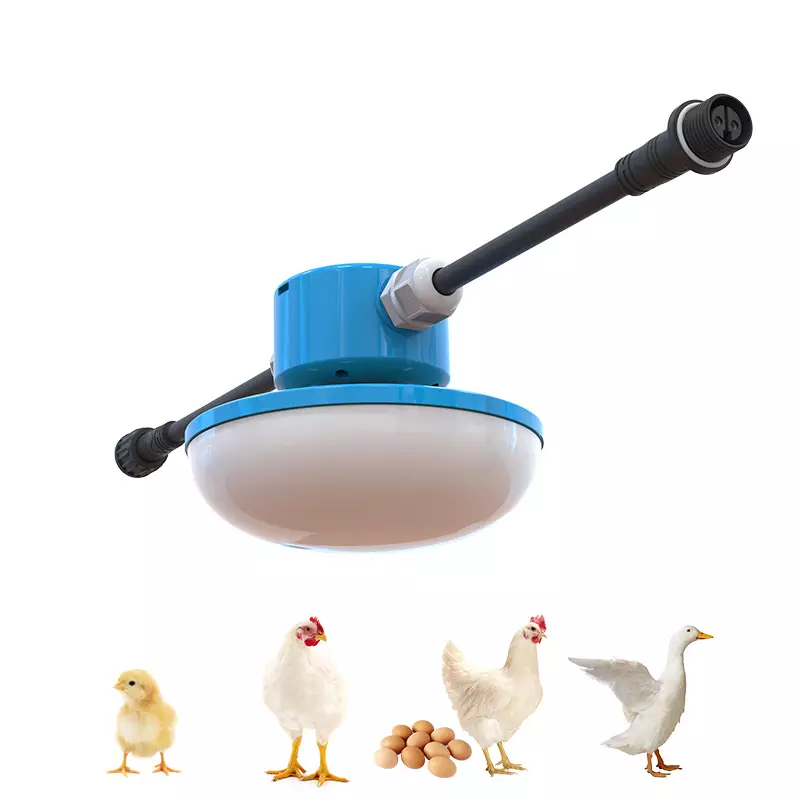
Why Spectrum Selection Matters More Than Brightness
Many farm operators assume that higher lumens equal better performance. In reality, animals perceive light very differently than humans do. For example, poultry are highly sensitive to red and blue wavelengths, while pigs and cattle respond to gradual photoperiod shifts rather than abrupt intensity changes. Through our animal-friendly lighting designs, we have observed that warm white (2700K–3000K) and monochromatic red or blue spectra produce the most consistent welfare benefits. Red light reduces cannibalism in laying hens and supports reproductive health. Blue light has a calming effect on swine and helps broilers gain weight more efficiently. When we deploy LED barn lights with adjustable color temperatures, farms report lower mortality rates and improved feed conversion ratios.
Practical Applications for Poultry and Livestock Barns
Our commercial LED barn lights carry ETL, DLC, TUV, SAA, PSE, CE, D-Mark, ROHS, GS, and UL certifications—meaning they perform safely under demanding barn conditions, including humidity, dust, and ammonia exposure. For poultry houses, we recommend dimmable fixtures that shift from cool blue during early growth to warm red before harvest. This spectrum transition mimics natural daylight cycles and encourages uniform flock development. In swine barns, we install LED barn lights with programmable color tuning to support farrowing sows and reduce aggression in grow-finish stages. Dairy operators, meanwhile, benefit from neutral white light (4000K) during milking to increase alertness and milk let-down. To properly light up farm animals, one must match the spectrum to the species’ innate visual biology—not just human convenience.
Verified ROI Through Animal-Centric Design
Since 2006, our focus on innovative LED technologies has helped farms worldwide achieve exceptional returns. A typical broiler house using szAMB’s dynamic spectrum LED barn lights can reduce mortality by 3–5% and improve weight gain by 6–8% per cycle. Layer operations see steadier egg production during winter months when red-enriched lighting mimics summer day lengths. These outcomes are not accidental; they stem from strict adherence to ISO14001 environmental standards and our in-house photobiological testing protocols. Every fixture we ship is designed to lower energy consumption by 50–70% compared to legacy systems, while the spectrum precision eliminates the flicker and harsh spikes that cause animal distress.
Final Thoughts on Smarter Barn Illumination
Selecting the best color light for animals is not a one-size-fits-all decision. It requires understanding each species’ visual system, behavioral triggers, and production goals. At szAMB, we combine certified engineering with livestock-specific photobiology to deliver LED barn lights that truly light up farm animals in a way that promotes welfare and profitability. Whether you manage poultry, swine, or dairy operations, our team can help you deploy spectrum-optimized lighting that lowers stress, cuts energy bills, and drives measurable ROI. Reach out to szAMB—where animal-friendly innovation meets certified quality.