
Light is one of the environmental factors that can influence the laying cycle of hens. The timing, duration, intensity, and spectrum of light all play a role in how birds respond to their housing environment.
So, does light affect chickens laying eggs? Yes. A well-planned lighting program can help maintain a stable daily rhythm and support consistent egg production, while irregular or poorly controlled lighting may interfere with flock management.
This article explains how light interacts with the reproductive cycle of laying hens, what to consider when designing chicken coop lighting for egg production, and how LED lighting systems can support reliable layer house management.
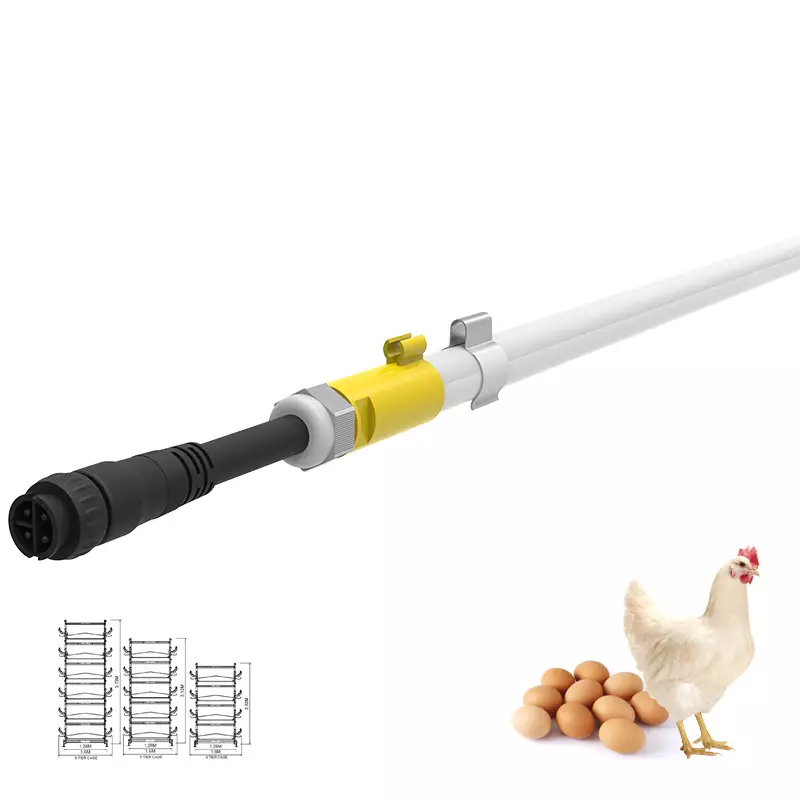
DC48V T6 LED lighting for layer houses and egg-production applications.
How Light Regulates the Egg-Laying Cycle
Hens respond to changes in day length through a biological process known as photoperiodism. Light entering through the eyes and other light-sensitive pathways provides a signal to the brain, helping regulate the hormonal activity associated with reproduction.
When the lighting program is stable and appropriate for the flock, it can help maintain a regular daily rhythm. This is why commercial layer farms pay close attention to the timing of light exposure rather than relying only on natural daylight.
Light does not work as an isolated solution. Age, breed, nutrition, housing conditions, health, and flock management also influence egg production. However, a consistent lighting schedule provides an important foundation for an effective poultry production program.
Four Lighting Factors That Matter in Egg Production
A poultry lighting program should be designed around four main factors: photoperiod, light intensity, spectrum, and darkness.
Photoperiod
Photoperiod refers to the number of hours that hens receive light within a 24-hour period. Many commercial layer programs use an extended light period, often around 14 to 16 hours per day, but the correct schedule should be adapted to flock age, production goals, housing conditions, and applicable management guidance.
Light Intensity
Lighting should be bright enough to support normal movement, inspection, feeding, and daily work, while avoiding excessive glare or uneven illumination. Consistent light levels throughout the layer house make the environment easier to manage.
Light Spectrum
Different light spectra may produce different behavioral and physiological responses in poultry. Red and white lighting can be selected for different management purposes, but the lighting schedule and spectrum should be evaluated as part of the complete flock program.
Darkness
A daily dark period is also important. Darkness gives hens time to rest and helps maintain a clear light-dark rhythm. Effective egg production lighting therefore requires both controlled illumination and a predictable period without artificial light.
Choosing LED Lighting for Layer Houses
Layer houses expose lighting equipment to conditions that can accelerate wear, including ammonia, humidity, dust, cleaning processes, and accidental impact. A suitable poultry lighting system should therefore combine biological lighting control with dependable environmental protection.
The szAMB DC48V T6 LED Lighting system is designed for demanding layer house applications. Its corrosion-resistant construction helps withstand exposure to ammonia and acid, while the humidity-resistant and shatter-resistant design supports safer operation in poultry environments.
With an IP67 waterproof rating and aviation-grade glue sealing, the system is built to provide stable performance in areas where moisture and regular cleaning are part of daily farm management.
Using Red and White Light in Poultry Lighting
A switchable red and white lighting system gives poultry producers more flexibility when adjusting the lighting environment.
Red-spectrum lighting is often considered in layer-house lighting programs because it can reach deeper into the housing environment and may influence reproductive responses. The actual effect depends on the flock, lighting schedule, bird age, and overall management program.
White light provides clearer visibility for workers and supports routine activities such as inspection, feeding, cleaning, and equipment maintenance.
By allowing operators to switch between red and white light, the lighting system can be adapted to different production stages and daily operating requirements. Lighting color should be selected together with the complete flock-management plan rather than used as a single factor for increasing egg production.
Built for Long-Term Poultry Farm Operation
Long-term reliability is essential for poultry farms because lighting systems may operate for many hours every day and can be difficult to replace once installed across a large housing area.
The szAMB DC48V T6 LED Lighting system provides a rated service life of more than 80,000 hours and is supplied with a 5-year warranty. These specifications support long-term planning for poultry farms, layer-house operators, agricultural lighting distributors, and livestock equipment suppliers.
The system can also be integrated with existing infrastructure and installed in layer cages or barn environments. This makes it suitable for lighting upgrades as well as new poultry-house projects.
How to Build a Practical Lighting Program for Laying Hens
An effective lighting program should be consistent, gradual, and matched to the needs of the flock.
Farm operators should consider the following points:
- Establish a regular daily light and dark schedule.
- Adjust the photoperiod according to the age and production stage of the hens.
- Keep illumination as uniform as possible throughout the housing area.
- Avoid sudden changes in brightness or lighting duration.
- Use dimming and switching functions to support gradual transitions.
- Monitor flock behavior, production data, and environmental conditions when evaluating the program.
- Coordinate lighting decisions with nutrition, ventilation, health management, and local poultry-care guidance.
For many commercial layer operations, a controlled light period of approximately 14 to 16 hours may be used during production. The exact schedule should be set according to the farm’s flock-management program rather than applied as a universal formula.
Support More Consistent Egg Production with Better Poultry Lighting
Light management is an important part of layer-house operation. The right combination of photoperiod, intensity, spectrum, and darkness can help farmers create a more stable environment for laying hens and improve daily production management.
For poultry farms and layer-house projects, the szAMB DC48V T6 LED Lighting system offers corrosion resistance, IP67 protection, switchable red and white light, long service life, and compatibility with existing infrastructure.
If you are planning a new layer-house lighting project or upgrading an existing poultry facility, contact szAMB to discuss your requirements. Our team can help you evaluate lighting layout, control functions, environmental protection, and installation conditions for a suitable egg-production lighting solution.