
When designing lighting for livestock environments, one of the most common questions we encounter is how high barn lights should be installed. In pig housing, this decision affects visibility, animal comfort, and even daily behavior patterns. At szAMB, we design swine light solutions specifically for lighting pig farms where both functionality and animal welfare are important.
For most pig barns, lights are typically installed around 2.5 to 4 meters above the floor. This range helps create even illumination while avoiding harsh glare at animal eye level. The goal is not just brightness, but a uniform lighting field that supports natural movement and clear visibility across pens. Research on swine environments shows that pigs are sensitive to both excessive brightness and uneven light distribution, so consistent spacing and controlled mounting height are essential for stable conditions in the barn.
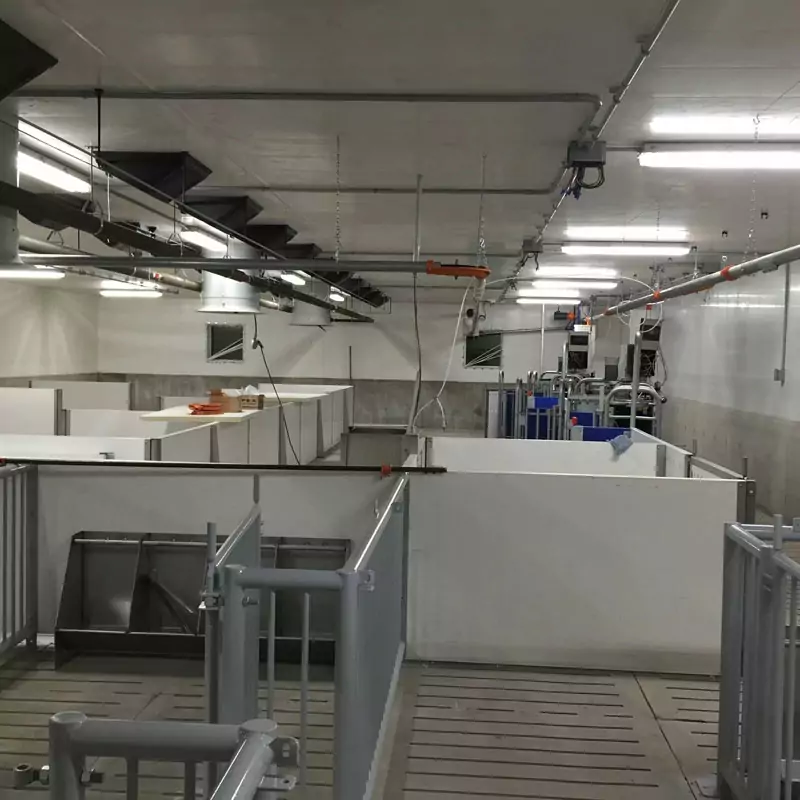
Designing Efficient Lighting for Pig Farms
When we approach lighting pig farms, we focus on more than just fixture placement. Light intensity, duration, and uniformity all work together to support animal routines. Studies suggest that pigs respond best to moderate light levels rather than overly bright conditions, with recommended ranges often around 40 to 50 lux depending on the barn area and production stage.
In practical farm design, lighting is usually arranged in linear or grid patterns along barn aisles. This ensures that feed areas, resting zones, and walkways all receive consistent coverage. If lights are installed too high without proper spacing, shadows can form between pens, making inspection and management more difficult.
How szAMB Swine Light Supports Better Barn Illumination
At szAMB, our swine light systems are designed specifically for livestock environments where durability and consistency matter. In pig housing, lighting must resist dust, moisture, and ammonia while still maintaining stable output over long hours of operation.
We design fixtures that support controlled beam angles, which help reduce wasted light and improve ground-level visibility. This is especially important in larger barns where lighting pig farms requires balancing energy efficiency with practical working conditions. Proper mounting height also ensures that light spreads evenly without creating hot spots that may disturb animal behavior.
Practical Guidance for Installation Height
In real farm applications, we recommend adjusting installation height based on barn ceiling structure:
In low-ceiling barns, lights can be mounted closer to 2.5 meters with wider beam angles to ensure full coverage.
In high-ceiling barns, typically above 4 meters, we use focused optics to maintain adequate light intensity at animal level.
Regardless of height, the key is maintaining consistency across the entire facility rather than relying on isolated bright zones.
Conclusion
Effective swine light planning is not only about how bright a barn is, but how well the lighting is distributed and positioned. For lighting pig farms, correct installation height helps create a stable environment that supports both daily operations and animal comfort. At szAMB, we continue to focus on practical lighting design that helps farms achieve reliable and balanced illumination throughout their pig housing systems.