
In modern poultry farming, lighting is no longer just about visibility. It has become part of environmental management that influences behavior, growth cycles, and productivity. Commercial LED barn lights are widely used in poultry houses because they provide stable illumination, energy efficiency, and controllable light spectra suited for animal housing conditions. A key focus in poultry lighting design is uniform brightness and adjustable intensity. Systems like those developed by szAMB are designed for livestock environments where consistent lighting helps maintain stable daily rhythms in chickens. Our LED barn lighting solutions are built to support large-scale poultry houses with features such as dimming control and wide-angle distribution, helping reduce shadows and uneven light zones that can disrupt flock behavior.
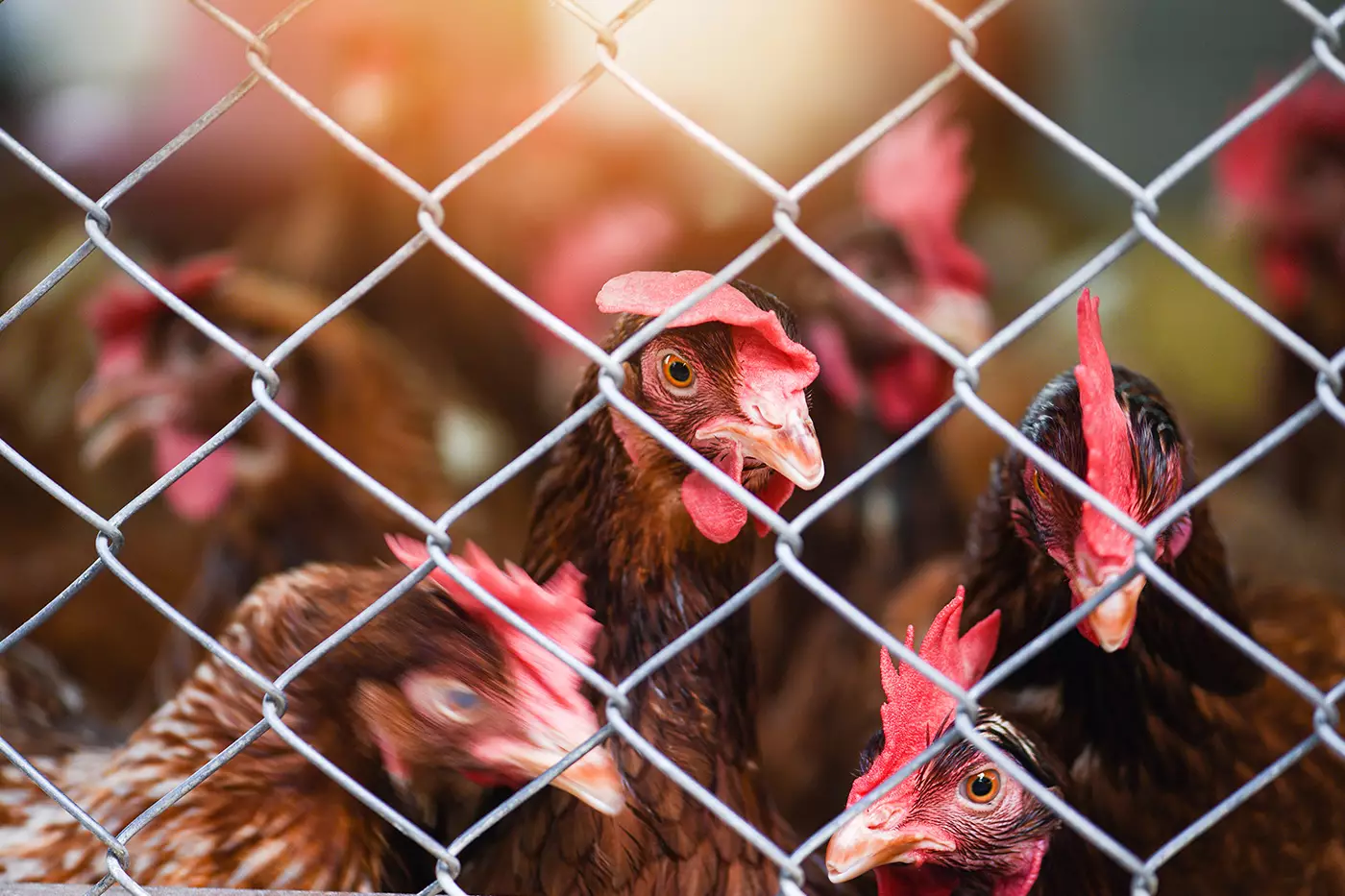
Does Red Light Help Chickens Lay Eggs
One of the most frequently asked questions in poultry lighting is, “Does red light help chickens lay eggs?” The answer is closely linked to how chickens perceive and respond to light.
Red light has longer wavelengths that can penetrate deeper into a chicken’s body and reach internal photoreceptors associated with reproductive hormone regulation. This stimulation can influence the release of hormones that control ovulation and laying cycles. In practical terms, red-dominant lighting helps maintain more consistent laying performance when used correctly in controlled environments.
Research in poultry lighting systems indicates that red and warm-spectrum lighting can support higher laying rates by influencing the reproductive axis and stabilizing laying cycles under artificial lighting schedules.
However, red light is not a standalone solution. The effectiveness depends on factors such as photoperiod length, light intensity, flock age, and overall farm management. Balanced lighting strategies are generally more effective than relying on a single color spectrum.
The Role of Commercial LED Barn Lights in Egg Production
In poultry production systems, commercial LED barn lights are used not only for illumination but also as management tools to regulate behavior and productivity. Controlled lighting schedules help simulate day length, which directly affects laying cycles.
Within systems developed by szAMB, LED barn lights are designed to support stable brightness levels and adjustable spectral output. This allows poultry farmers to fine-tune lighting conditions according to different growth stages, from pullet development to peak laying periods. According to poultry lighting principles, maintaining consistent light exposure helps regulate feeding behavior and reproductive hormone activity, both of which are essential for steady egg production.
Practical Lighting Considerations in Poultry Houses
When integrating LED barn lighting into poultry environments, several factors matter:
First is light duration. Chickens typically respond best to 14 to 16 hours of light per day during laying periods. This extended photoperiod helps maintain reproductive activity.
Second is light intensity. Too much brightness may stress birds, while too little can reduce feeding activity and egg output.
Third is light spectrum balance. Red light can support reproductive stimulation, but it is usually combined with warm white light to ensure natural behavior patterns and visibility inside barns.
Commercial LED barn lighting systems are designed to combine these elements, making them suitable for structured poultry house environments where consistency is critical.
Conclusion
The use of commercial LED barn lights has become an important part of modern poultry farming strategies, especially in managing egg production efficiency. Understanding does red light help chickens lay eggs reveals that red spectrum lighting can support reproductive activity by influencing hormonal responses, but it works best as part of a balanced lighting system.
With solutions from szAMB, poultry farmers can create more controlled lighting environments that support stable laying cycles, better flock management, and improved production consistency. Lighting design, when properly applied, becomes a practical tool that supports both animal welfare and operational efficiency in poultry houses.