
When egg production is your priority, lighting becomes a practical barn management tool. For many poultry operations, the question is not only whether the lights are on, but how many hours of light for chickens to lay eggs per day. The right daily light exposure can help support consistent routines that align with the hens’ natural biology, while also fitting the farm’s production goals.
At szAMB, we design commercial LED barn lights with a focus on animal-friendly lighting and controllable performance. We support lighting management for layer houses so farms can maintain stable schedules and make adjustments in a structured way.
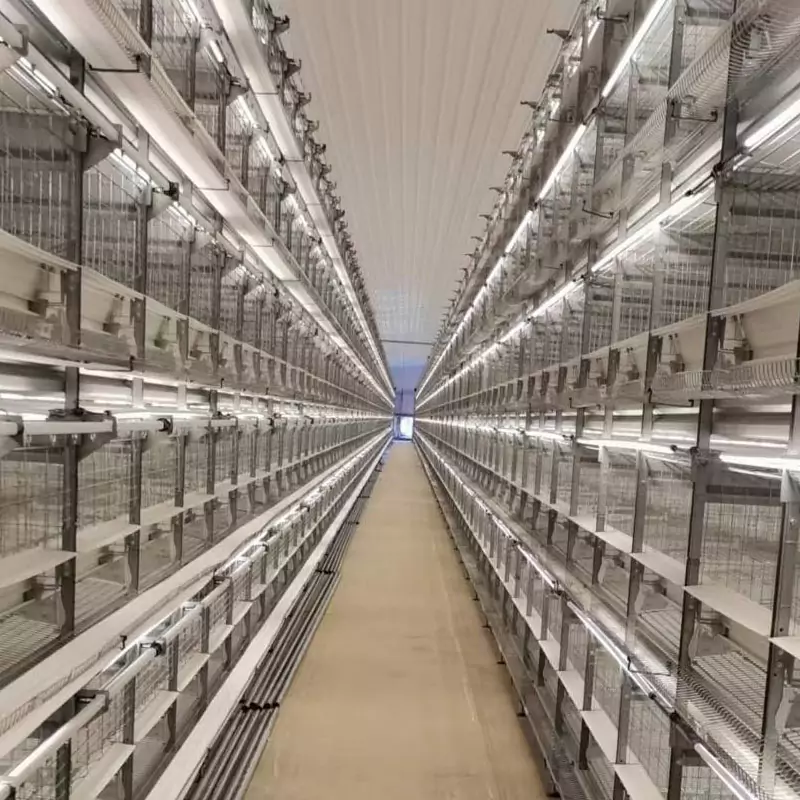
How Many Hours of Light for Chickens to Lay Eggs Per Day?
A common approach in layer management is to provide a planned daily photoperiod, then gradually build toward a target schedule as the flock matures. While exact targets can vary based on genetics, temperature conditions, and local standards, many farms aim for a steady overall light exposure that is maintained throughout the laying period.
In practice, growers typically follow a staged program. During early development, daily light exposure is increased gradually to support development. Once the flock is in production, the light schedule is usually kept consistent day to day. The core idea behind how many hours of light for chickens to lay eggs per day is consistency in the photoperiod, because sudden changes can disrupt normal behavior and production rhythm.
Lighting intensity is also important. A farm may provide the chosen number of hours, but if the light distribution is uneven or the output changes in an unstable way, the flock’s experience in different zones may not match the intended program. This is one reason farms consider engineered commercial LED barn lights.
Why Stable Control Matters in a Layer House
Night and dimming control are often part of the plan. Many layer houses rely on smooth transitions between light phases to reduce stress and support calm flock behavior. With commercial LED barn lights from szAMB, we emphasize flicker-free, animal-friendly dimming technology, designed to support controlled lighting management.
Consistent control also helps in scheduling maintenance tasks. If the barn needs temporary adjustments for feeding, cleaning, or inspection routines, the lighting system can be managed without abrupt changes that may affect flock comfort. Farms can then keep the overall lighting program aligned with their production timeline.
Practical Considerations for Choosing Commercial LED Barn Lights
For egg production, coverage uniformity and controllability can make the schedule easier to implement. When hens can access similar lighting conditions across the barn, it becomes simpler to maintain the daily photoperiod the farm intends. That includes the light level the flock experiences during the day and the way the barn transitions across lighting phases.
szAMB also supports deployment with qualified product compliance. Our commercial LED barn lights are approved under multiple certifications, including ETL, DLC, TUV, SAA, PSE, CE, D-Mark, and ROHS, and they are also listed under GS and UL. For farms working with diverse regulatory requirements, this can reduce uncertainty during procurement and installation.
Conclusion
So, how many hours of light for chickens to lay eggs per day? The best answer depends on the flock’s development stage and the farm’s production plan, but the overall approach is consistent, staged photoperiod management with careful attention to intensity and control. With commercial LED barn lights from szAMB, farms can implement stable lighting schedules, support animal-friendly dimming, and maintain predictable performance in layer houses.