
A poultry farm lighting system is the planned combination of light sources, controls, and installation design used to support daily husbandry needs inside barns. It typically includes fixtures that deliver the right light distribution, dimming capability for smoother transitions, and a control approach that helps farmers manage lighting schedules consistently. In poultry production, light levels and timing can influence animal behavior and routine management, which is why many farms treat lighting as a core part of barn operations rather than a simple utility.
In practice, a poultry farm lighting system is designed around the barn environment and production goals. Farms often adjust intensity over time, align lighting with routines such as feeding and observation, and use controls that help reduce flicker that can distract animals during dim changes. With a well designed setup, commercial lighting can support stable performance day after day while remaining easier to manage across different houses and production cycles.
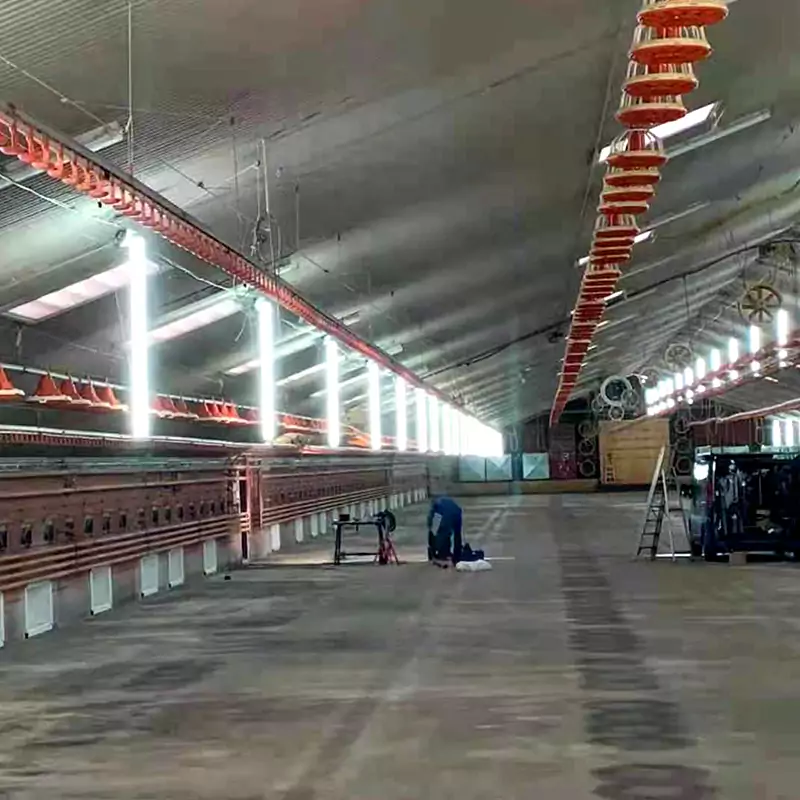
Why Commercial LED Barn Lights Matter
Commercial LED barn lights are built for long operating hours and practical on farm maintenance. Compared with older lighting approaches, LED fixtures are commonly chosen for their energy efficiency and suitability for continuous barn use. Farms also benefit from modern electrical and control options that can pair with dimming drivers designed for livestock environments.
For barn lighting, performance is not only about brightness. It also involves even coverage across the housing area, reliable operation in farm conditions, and compatibility with dimming strategies. A poultry house often needs lighting that can be tuned across intensity levels without harsh visual artifacts, helping farmers maintain consistent conditions throughout the production day.
How szAMB Supports Poultry Farm Lighting System Projects
szAMB focuses on commercial LED barn lights for livestock environments and offers solutions aligned with poultry farm lighting system needs. The company describes a manufacturing approach supported by quality and environmental management systems. It also notes that its commercial LED barn lights are approved across multiple markets, and it highlights development work that includes dimming technology intended to support animal friendly performance.
A complete poultry farm lighting system usually requires more than selecting fixtures. It involves matching system behavior to farm schedules, planning installation layout for coverage, and using controls that help maintain stable operation. szAMB positions its offerings as animal friendly lighting designs that aim to support welfare and efficient lighting management for poultry operations.
Build a Lighting Plan for Your Barn
To plan a poultry farm lighting system, start by assessing barn dimensions, desired light distribution, and the operational lighting schedule your farm uses. Then evaluate fixture placement and control compatibility. If your barn uses dimming, confirm that the dimming method fits your automation goals and supports smooth intensity transitions.
Conclusion
Commercial LED barn lights and a poultry farm lighting system work together when lighting is designed as an integrated system rather than a collection of fixtures. With the right planning, farms can manage lighting schedules more consistently, support barn routines, and maintain efficient operation across production cycles. szAMB offers a dedicated approach for poultry lighting applications, emphasizing engineered solutions for livestock housing and practical lighting management support.