
At szAMB, we design lighting solutions for agricultural environments where consistency, durability, and energy efficiency matter. In barns and poultry houses, lighting is not just about visibility. It directly connects to animal behavior, productivity, and daily management routines. This is why modern systems such as commercial LED barn lights are increasingly used alongside structured farming practices, especially in poultry operations.
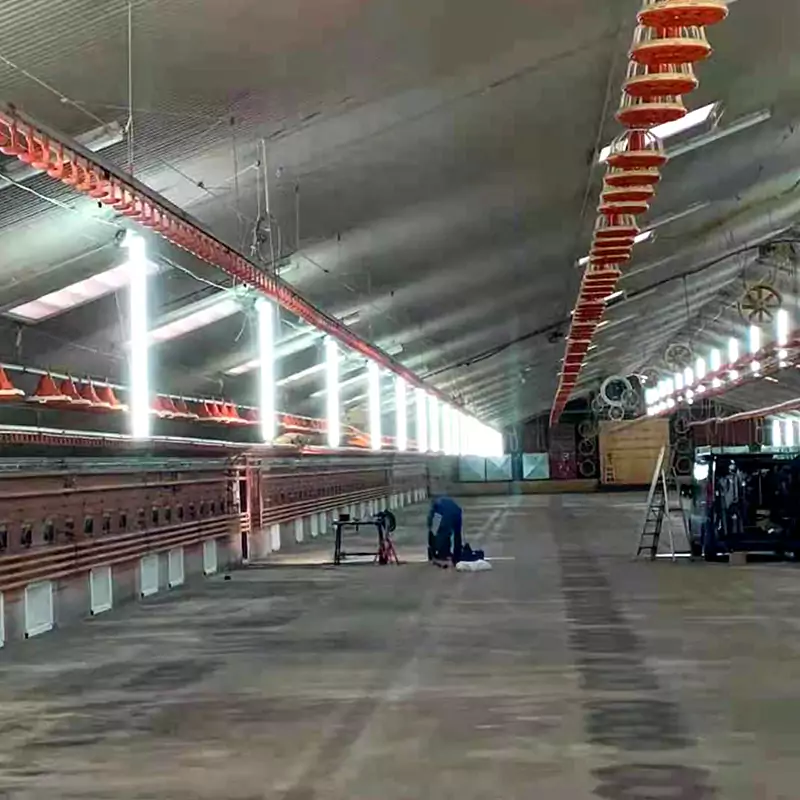
Why Lighting Matters in Barn Environments
In livestock and poultry buildings, lighting influences movement, feeding patterns, and biological cycles. Traditional barn lighting often creates uneven brightness or higher energy use, while LED systems provide more controlled illumination across large spaces.
For farms, the goal is not simply brightness but a stable environment where animals can function normally. In poultry production, lighting even becomes part of the biological management system, helping regulate reproduction cycles and daily rhythms.
Do Chickens Need Light to Lay Eggs
A common question in poultry farming is “do chickens need light to lay eggs?” The answer is yes, but it is not about constant brightness. It is about duration and consistency.
Research and field practice show that hens typically require around 14 to 16 hours of light per day to maintain steady egg production cycles. Light affects hormonal activity in hens, which in turn influences ovulation and laying behavior. When daylight shortens, egg production often decreases naturally unless supplemental lighting is provided.
Studies on poultry lighting also show that controlled artificial light can support winter laying by simulating longer days, but it primarily functions by stabilizing the timing of production cycles and reducing seasonal fluctuations.
In simple terms, chickens do not need intense light, but they do rely on a stable light schedule to maintain laying consistency.
The Role of Commercial LED Barn Lights in Poultry Houses
This is where commercial LED barn lights become useful. In poultry environments, lighting needs to be uniform, low stress, and adjustable.
At szAMB, our barn lighting systems are designed with these practical needs in mind:
First, uniform light distribution helps reduce dark corners in the barn. Chickens naturally avoid poorly lit or shadowed areas, which can affect laying behavior and egg location.
Second, stable light intensity supports a predictable daily rhythm. Sudden changes in brightness can disrupt feeding and resting cycles.
Third, energy efficiency is important for large-scale operations where lighting runs for many hours each day.
In poultry-focused designs, LED systems are often optimized for long operating hours and controlled spectrum output, supporting both animal comfort and production consistency.
Connecting Barn Lighting with Egg Production Efficiency
When properly applied, lighting becomes part of the overall management system rather than just infrastructure. In egg-laying environments, consistent light exposure helps maintain hormonal signals that support ovulation cycles. A well-planned lighting setup ensures hens experience stable day length simulation, which supports regular production.
At szAMB, we focus on practical lighting design for barns where both animal welfare and operational efficiency are considered together. The goal is to create an environment where lighting supports natural behavior rather than disrupts it.
Conclusion
Chickens do need light to lay eggs, but what matters most is not brightness alone, but controlled duration and consistency. In commercial poultry settings, properly managed lighting helps maintain stable egg production cycles throughout the year.
Commercial LED barn lights provide a reliable way to achieve this balance. For agricultural environments like poultry houses, szAMB designs lighting systems that support both structural durability and biological needs, helping farmers maintain consistent lighting conditions across large spaces without unnecessary complexity.