
At szAMB, we often look at how environmental conditions shape animal productivity, especially in poultry housing. One of the most common questions we encounter is whether chickens need light to lay eggs, and how lighting systems such as commercial LED barn lights can support this process in real farm settings.
Light as a Natural Trigger for Egg Laying
Chickens do not lay eggs randomly throughout the year. Their reproductive cycle is closely linked to daylight exposure. In simple terms, light acts as a biological signal that tells a hen’s body when conditions are suitable for egg production.
When daylight increases, especially during spring and summer, hens naturally enter a stronger laying phase. When days become shorter in fall and winter, egg production often slows or pauses. This is because reduced light affects hormone activity linked to reproduction.
Research and poultry management practices consistently show that hens typically require around 14 to 16 hours of total light per day to maintain steady egg production. Without sufficient light exposure, their bodies shift energy away from laying and toward rest and survival cycles.
Why Artificial Lighting Matters in Poultry Housing
In commercial and controlled farming environments, natural sunlight alone is often not enough to maintain consistent production. This is where lighting systems become important.
Supplemental lighting helps farmers extend the effective daylight period, especially during seasons with shorter natural days. Studies show that maintaining a stable light schedule can support consistent laying performance and reduce seasonal drops in egg output.
For this reason, modern poultry farms often integrate structured lighting systems into barn design rather than relying solely on outdoor conditions.
Commercial LED Barn Lights in Egg Production Environments
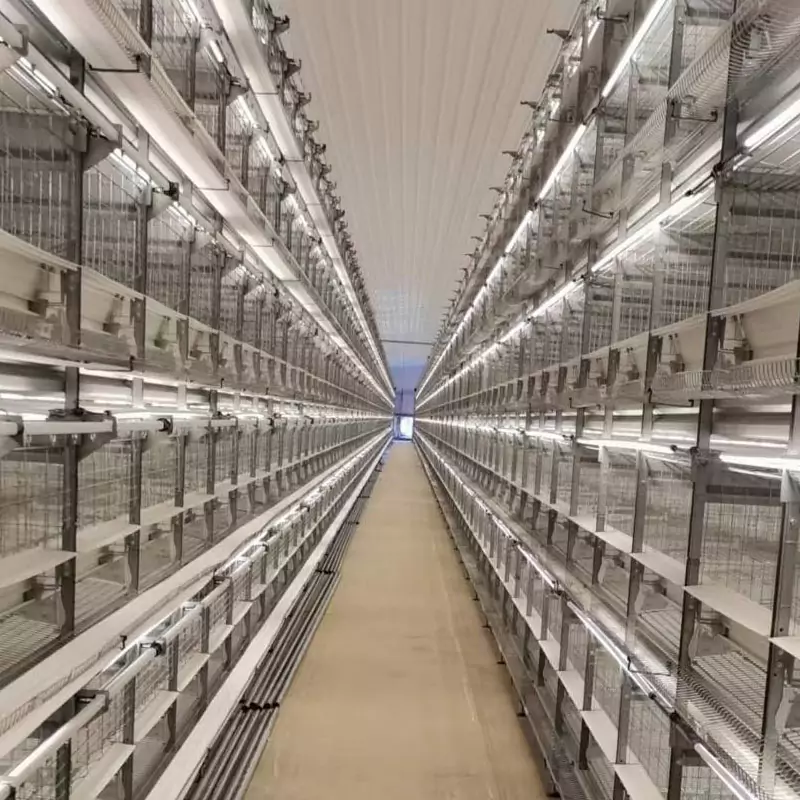
This is where commercial LED barn lights play a practical role. Unlike traditional lighting, LED systems can provide stable brightness, energy efficiency, and uniform coverage across large poultry spaces.
In barn environments, consistent illumination helps chickens access feed and water easily, while also supporting their biological rhythm. Proper light distribution reduces dark zones in the housing area, which can otherwise affect flock behavior and laying consistency.
From our experience at szAMB, lighting design is not only about brightness but also about stability and placement. A well-designed lighting setup helps maintain a controlled environment that aligns with natural poultry behavior.
Finding the Right Balance in Lighting
While light supports egg production, more is not always better. Chickens still require periods of darkness for rest and normal biological recovery. Overexposure to light or irregular lighting schedules can create stress in the flock and negatively affect laying consistency.
A balanced lighting program typically includes:
Consistent daily light duration
Even distribution across the barn
A stable day-to-night rhythm
These factors together help maintain both productivity and animal well-being.
Conclusion
So, do chickens need light to lay eggs? The answer is yes, but in a controlled and balanced way. Light is not just a physical condition; it is a biological trigger that influences reproductive cycles. In modern poultry environments, commercial LED barn lights provide a practical solution to manage lighting conditions more precisely. When used correctly, they help support consistent egg production while maintaining a stable environment for the flock. At szAMB, we believe that thoughtful lighting design is a practical component of modern poultry housing management.