
When we design lighting for livestock environments, especially pig housing, we often begin with a simple question: are pigs afraid of the dark? In practice, pigs are not “afraid” in a human sense, but they are highly sensitive to changes in light, contrast, and environment. Poor lighting can influence their feeding behavior, movement patterns, and overall stress levels. This is where pig lighting systems become important for maintaining a stable barn environment.
At szAMB, we focus on lighting solutions that support both animal comfort and farm efficiency. Proper illumination helps pigs recognize their surroundings clearly, reduces unnecessary stress, and supports consistent daily rhythms inside the barn.
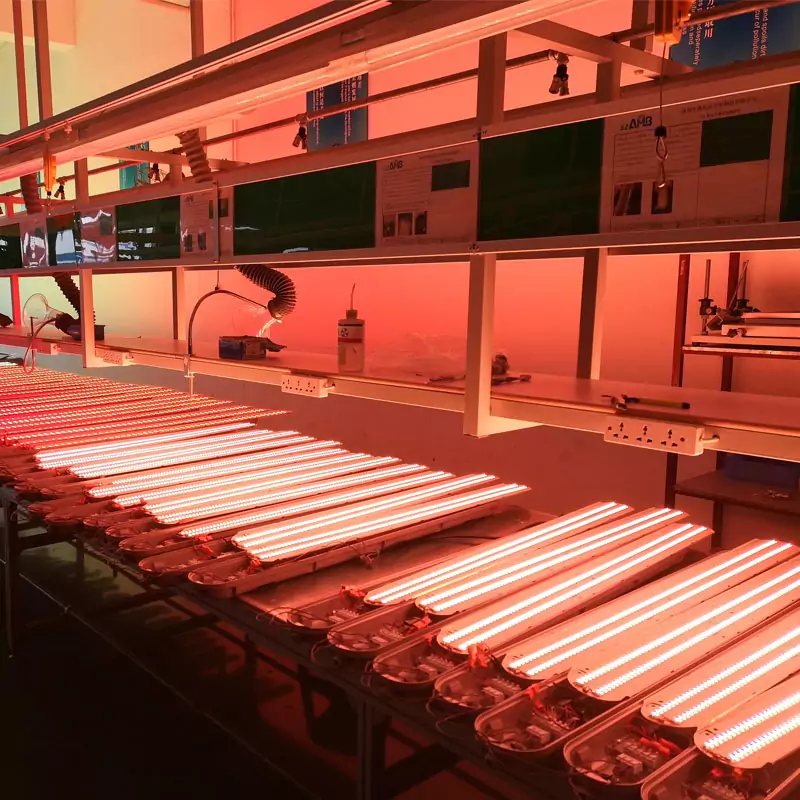
Why Pig Lighting Matters in Barn Environments
Pig farms require lighting that is not just bright, but also stable and evenly distributed. Sudden darkness or uneven shadows may disturb pigs, especially in large-scale housing systems. Research and farm applications show that controlled lighting conditions can help maintain healthier behavior patterns and improve overall barn management.
In many modern pig houses, swine light systems are designed to simulate natural daylight cycles. This helps pigs maintain a steady routine for feeding and resting. Some lighting setups even include dimming functions, allowing gradual transitions between day and night conditions, which avoids sudden environmental changes.
At szAMB, our pig lighting systems are built for these real farm conditions, where durability and consistent performance matter as much as light quality. szAMB lighting products are engineered to operate in environments with ammonia exposure, humidity, and long operating hours without frequent maintenance needs.
How Swine Light Supports Animal Welfare
Good swine light design is not only about visibility for workers. It also directly affects how pigs interact with their environment. For example, certain lighting colors can be used strategically. Red light is often used during nighttime farm work because pigs have limited perception of it, allowing workers to move without disturbing the animals.
This type of controlled lighting approach helps reduce stress behaviors such as unnecessary movement or aggression. It also supports better rest cycles, which are important for growth and overall herd consistency.
Practical Design in Pig Lighting Systems
Modern pig lighting systems need to be robust. Farms are challenging environments with frequent cleaning, moisture, and chemical exposure. That is why swine light fixtures are typically built with sealed housings and protective coatings to ensure long service life.
At szAMB, we integrate these requirements into every pig lighting design. Our systems are made for uniform illumination across barns, helping eliminate dark zones and supporting smoother farm operations.
Conclusion
So, are pigs afraid of the dark? The more accurate answer is that pigs respond strongly to their environment, and poor lighting can affect their comfort and behavior. With well-designed swine light systems and stable pig lighting setups, farms can create more consistent conditions that support animal welfare and operational efficiency.
At szAMB, we continue developing lighting solutions that help farmers build better-controlled environments where pigs can grow in a stable and predictable setting.