
In modern pig farming, lighting is more than just visibility. As we work with farmers and livestock environments, we often get asked whether swine LED lighting systems affect pigs’ behavior, growth, and welfare. Swine LED lighting impacts pig behavior by supporting stable circadian rhythms and reducing stress through flicker-free, uniform light distribution.
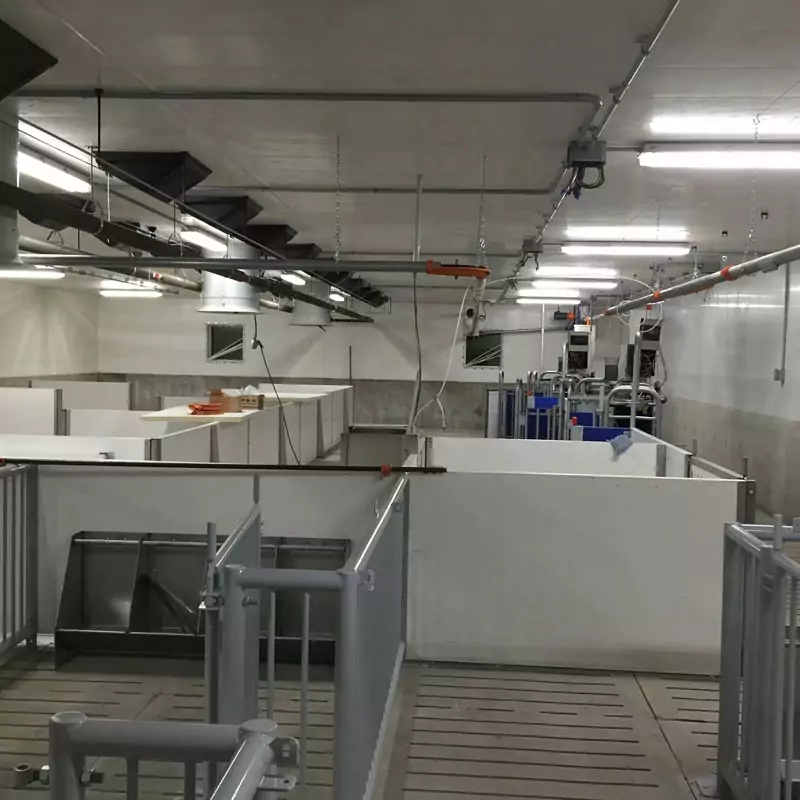
How Light Affects Pigs in Barn Environments
Pigs rely on light cues to regulate their internal biological clock. Research shows that light exposure can influence feeding behavior, growth patterns, and rest cycles through the retina–brain signaling system that controls circadian rhythms.
We understand that pigs are not highly sensitive to bright light and generally tolerate artificial lighting well. However, extremely intense lighting or poorly managed schedules can lead to stress or disrupted rest. Studies also suggest that continuous lighting may increase stress and reduce natural resting behavior in pigs.
At the same time, controlled light periods of around 8 to 16 hours can support stable feeding activity and normal growth cycles, especially in indoor farming systems.
Why Swine LED Lighting Matters in Barn Design
When we design swine LED lighting systems, we focus on stability, consistency, and animal comfort rather than brightness alone. LED technology allows us to create more uniform illumination across barns, which helps pigs move, eat, and rest more naturally.
Compared with traditional lighting, LED systems bring several practical advantages. They use less energy, generate lower heat, and can provide more stable lighting conditions with minimal flicker. These features help maintain a calmer environment in swine barns and reduce unnecessary disturbance during daily routines.
Some lighting designs also adjust color temperature to better match pig vision sensitivity, supporting more natural behavior patterns in controlled environments.
Practical Effects of Swine Light on Pig Performance
From our experience and industry research, swine light systems do not directly harm pigs when properly managed. Instead, the key factor is how lighting is used. Balanced intensity, consistent day and night cycles, and proper distribution across the barn are what matter most.
In some cases, optimized lighting can improve feed intake consistency and support smoother growth performance. It can also help farm workers monitor animals more effectively without disturbing the pigs’ resting zones.
Conclusion
Swine LED lighting does affect pigs, but the impact depends on design and management rather than the technology itself. At szAMB, we focus on building swine light solutions that support animal comfort, stable behavior, and practical farm operation needs. When lighting is properly planned, it becomes a supportive environmental factor that contributes to more consistent and manageable pig farming conditions.