
We design lighting systems with a clear focus on livestock environments where stability and consistency matter. In pig farming, illumination is not just about visibility but about supporting daily rhythms inside enclosed housing. With our experience at szAMB, we develop lighting setups that help maintain a more stable barn environment through carefully engineered optical performance.
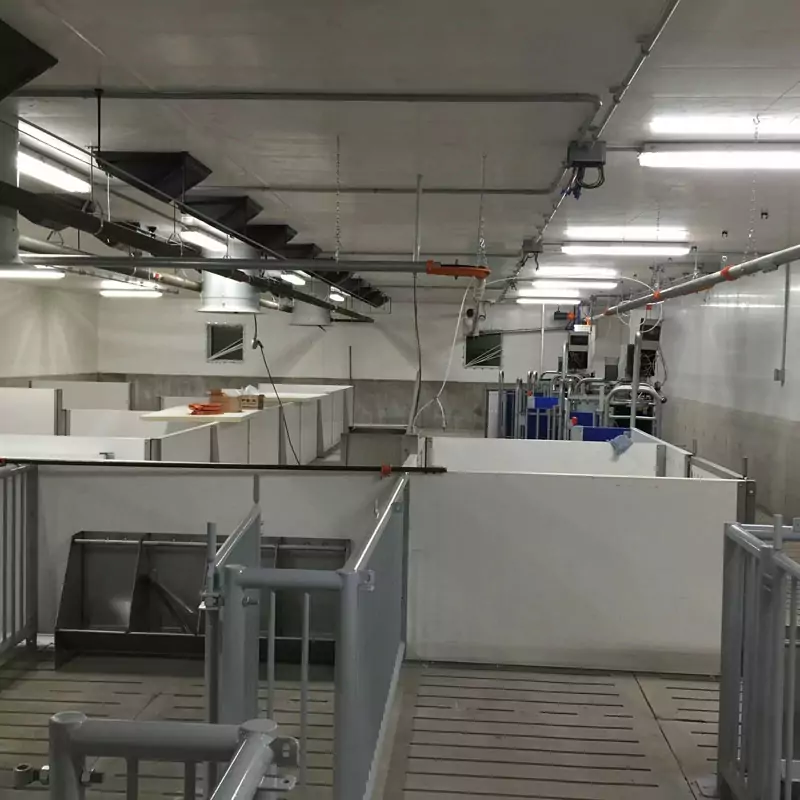
Role of Swine Light in Modern Pig Housing
In enclosed farming systems, lighting conditions can directly influence how pigs behave throughout the day. A properly designed swine light setup helps create uniform brightness across different zones of a barn, allowing pigs to move, rest, and feed with fewer disruptions.
We focus on durability as well, since barn environments often contain moisture, ammonia, and frequent cleaning cycles. Our systems are built to withstand these conditions while maintaining consistent output over time. According to our application cases, such lighting is already used in swine farms across different regions to support stable housing conditions and operational efficiency.
How Does Advanced Swine Lighting Affect Swine Growth?
Lighting plays a role in regulating animal behavior, which can indirectly influence growth performance. In pig housing, controlled light exposure helps support feeding patterns, resting cycles, and general activity levels.
Research on pig environments shows that pigs rely on light for spatial awareness, feeding behavior, and interaction within pens. Balanced lighting conditions help avoid overly bright or overly dim environments, both of which can disrupt normal activity patterns.
In practical farming environments, a stable lighting schedule can support:
First, more consistent feed intake during active hours. When pigs can clearly locate feeders and water points, their daily routines become more predictable.
Second, improved resting conditions. Dimmer periods encourage natural resting behavior, which is important for recovery and steady development.
Third, reduced stress from lighting fluctuations. Sudden changes in brightness can affect behavior, so uniform illumination helps maintain a calmer barn atmosphere.
Through these mechanisms, pig lighting systems contribute indirectly to a more balanced growth environment rather than forcing rapid change.
Pig Lighting Design Considerations in szAMB Systems
We integrate several design principles into our pig lighting solutions to match real farm conditions.
Uniform light distribution is one of the key elements. It reduces shadowed areas and ensures that pigs in different pen sections experience similar lighting levels.
Flicker control is another important factor. Stable illumination helps avoid unnecessary disturbance in enclosed spaces.
We also prioritize resistance to harsh barn conditions. Equipment must remain stable in environments with humidity and cleaning processes, which is why durability is a core requirement in our design approach.
Practical Value in Farm Operations
From a farm management perspective, lighting systems also support daily work efficiency. Staff can observe animals more easily, perform checks, and manage feeding schedules with clearer visibility.
At the same time, lighting consistency contributes to better environmental control, especially in closed barns where natural light is limited. Over time, this helps maintain a more predictable operational rhythm.
Conclusion
We believe lighting is an essential part of livestock environment design rather than a simple utility. Through pig lighting solutions developed by szAMB, we focus on stable illumination, environmental adaptability, and behavioral support within pig housing systems. By aligning lighting conditions with natural animal routines, farms can create more consistent and manageable production environments.